

Discover Two of Istanbul’s Most Historic Neighborhoods
Stretching along the southern shore of the Golden Horn, Fener and Balat offer a very different experience from Istanbul’s monumental historic center around Sultanahmet. Here, history is encountered not only through famous landmarks, but through narrow streets, old houses, religious institutions, neighborhood churches, synagogues, schools, and traces of communities that shaped the city over many centuries.
Although Fener and Balat are often mentioned together today, the two neighborhoods developed distinct identities.
Fener became closely associated with Istanbul’s Greek Orthodox community and the Ecumenical Patriarchate of Constantinople, while Balat became one of the most important historic centers of Jewish life in Ottoman Istanbul. The surrounding area was also home to Muslims, Armenians, Bulgarians, and other communities, creating a remarkably complex religious and cultural landscape.
Today, colorful houses and atmospheric streets have made Fener and Balat popular with visitors and photographers. Yet behind their picturesque appearance lies a much deeper story—one that reaches from Byzantine Constantinople through the Ottoman Empire and into modern Istanbul.
Where Are Fener and Balat?
Fener and Balat are located within Istanbul’s historic Fatih district, along the Golden Horn and northwest of the better-known attractions of Sultanahmet.
The neighborhoods stand close to one another and can easily be explored together on foot. Their streets rise from the waterfront toward the hills of the Historic Peninsula, creating a maze of steep lanes, stairways, historic houses, small squares, churches, synagogues, mosques, cafes, and local businesses.
Their location along the Golden Horn was historically important. This great natural harbor connected different districts of Constantinople and later Ottoman Istanbul while providing access to commercial areas, ports, workshops, and residential neighborhoods.
Fener and Balat consequently developed not as isolated quarters, but as parts of a much larger urban world surrounding the Golden Horn.
The History of Fener and Balat
The history of this part of Istanbul extends back to the Byzantine period, when the areas along the Golden Horn formed part of the urban landscape of Constantinople.
The character of the neighborhoods changed considerably following the Ottoman conquest of Constantinople in 1453.
Sultan Mehmed II sought to rebuild and repopulate his new capital, bringing and encouraging people from different parts of the expanding Ottoman Empire to settle in the city. Greeks, Jews, Armenians, Muslims, and other communities became part of the changing social geography of Ottoman Constantinople.
Over the following centuries, Fener developed into an important center of Greek Orthodox religious and intellectual life, while Balat became strongly associated with the city’s Jewish population.
These identities were never absolute. The neighborhoods and surrounding districts contained overlapping communities, and their populations changed repeatedly as a result of fires, economic circumstances, migration, political events, and the gradual expansion of Istanbul.
The streets visitors explore today are therefore the product of many historical layers rather than a single period.
Fener: The Greek Orthodox Heart of Ottoman Istanbul
The name Fener, known historically in Greek as Phanar, became closely associated with the Greek Orthodox community of Ottoman Constantinople.
Its importance increased considerably after the Ecumenical Patriarchate of Constantinople eventually established its seat in the neighborhood around the beginning of the 17th century.
The presence of the Patriarchate helped transform Fener into an important center of Orthodox Christianity. Churches, schools, residences, and community institutions developed around it, while prominent Greek Orthodox families became increasingly influential within Ottoman political and commercial life.
For visitors today, Fener provides a fascinating window into the history of the Greek Orthodox community in Istanbul and the continuing importance of Constantinople within the Orthodox Christian world.
The Ecumenical Patriarchate of Constantinople
One of the most important landmarks in Fener is the Ecumenical Patriarchate of Constantinople, one of the historic centers of Eastern Orthodox Christianity.
The bishopric of Constantinople rose dramatically in importance after Constantine the Great established the city as an imperial capital in the 4th century. The Council of Constantinople in 381 gave the bishop of Constantinople a position of honor immediately after the bishop of Rome, reflecting the growing political and religious importance of the imperial city.
Over the following centuries, Constantinople became one of the principal centers of Christianity.
After the Ottoman conquest, the Patriarchate continued to play an important role in the religious life of the Orthodox Christian population of the empire. Its residence changed several times before becoming established in Fener.
The Patriarchate remains there today, making Fener not merely a neighborhood containing monuments from the past, but a place that continues to hold profound significance for Orthodox Christians around the world.
The Patriarchal Church of St. George
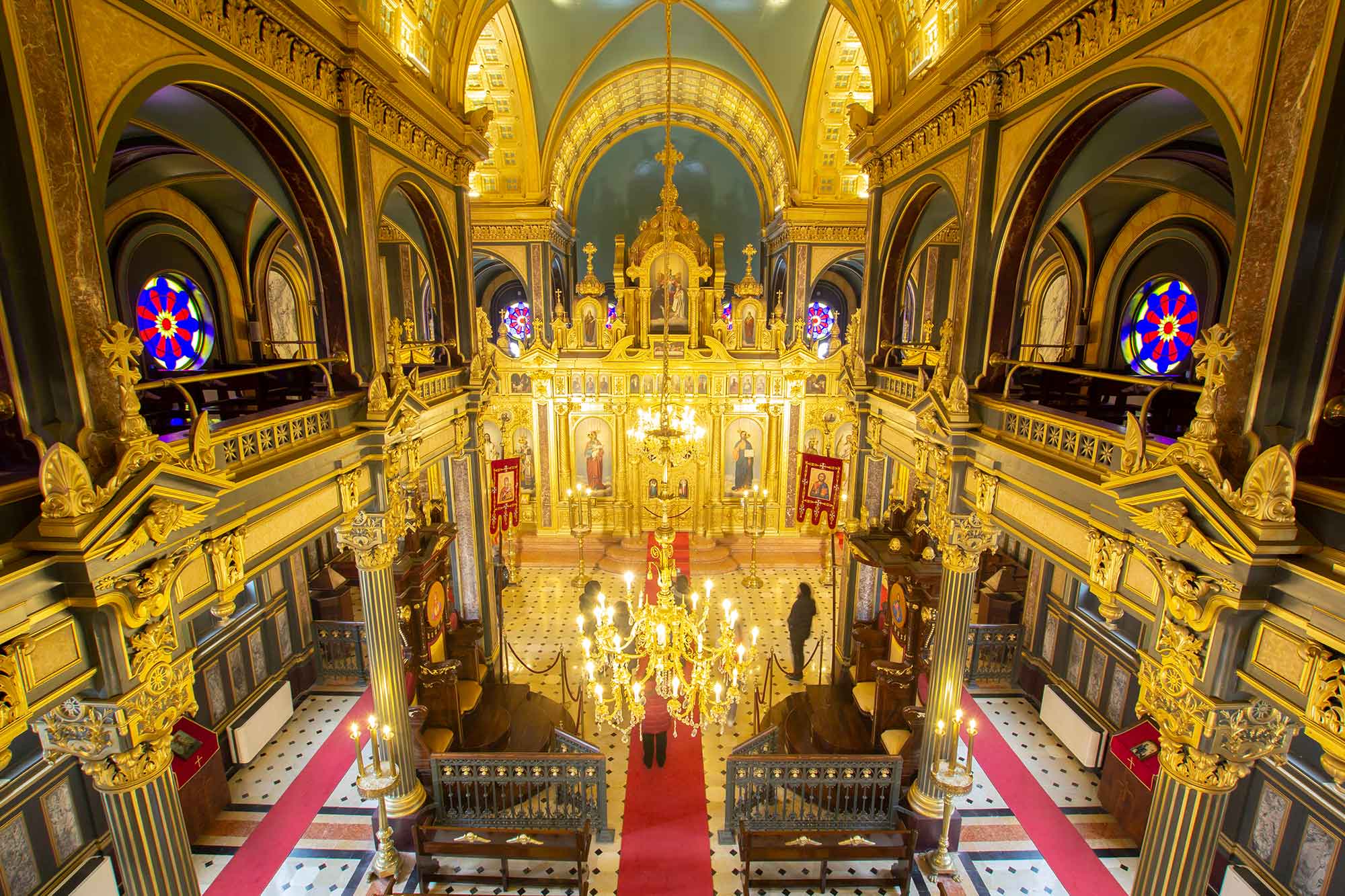
Within the Patriarchal complex stands the Church of St. George, the principal church of the Ecumenical Patriarchate.
Its relatively modest exterior can surprise visitors accustomed to the monumental scale of Istanbul’s great Byzantine churches. Its significance, however, is primarily religious and historical rather than architectural scale.
Inside are important icons, liturgical furnishings, relics, and objects connected with centuries of Orthodox Christian tradition.
The church remains an active place of worship and serves as the setting for important ceremonies of the Ecumenical Patriarchate.
For visitors interested in Christian history, Fener therefore provides a remarkable connection between the Byzantine Christian heritage of Constantinople and the continuing Orthodox community of modern Istanbul.

The Phanariots
Fener also gave its name to one of the most influential groups in later Ottoman history: the Phanariots.
The term generally refers to prominent Greek Orthodox families associated with the Fener district who became influential particularly during the 17th and 18th centuries.
Highly educated and often multilingual, members of Phanariot families served the Ottoman administration in important diplomatic and bureaucratic positions. Some became Grand Dragomans, acting as senior interpreters and diplomatic intermediaries for the Ottoman government.
Phanariot families also played important roles in the Danubian principalities of Moldavia and Wallachia, where members of several families were appointed as rulers during the 18th and early 19th centuries.
Their story illustrates the complex position of prominent Christian families within the Ottoman system and the international character of Constantinople during this period.
The political influence of the Phanariots declined dramatically during the upheavals surrounding the Greek War of Independence in the 19th century, but their legacy remains an important part of Fener’s history.
Phanar Greek Orthodox College
Towering above the surrounding streets is one of the most recognizable buildings in Fener: the Phanar Greek Orthodox College.
With its monumental red-brick facade and prominent position on the hill, the building is sometimes mistaken by visitors for a church or even a castle.
The present structure dates from the late 19th century, although the educational tradition associated with the institution reaches much further back.
The school became an important center of Greek Orthodox education and intellectual life in Istanbul. Its commanding architecture also reflects the prosperity and confidence of parts of the city’s Greek community during the later Ottoman period.
Today, the building remains one of the defining landmarks of Fener’s skyline and one of the most photographed structures along the Golden Horn.
Balat: Centuries of Jewish Heritage
Immediately beside Fener lies Balat, a neighborhood deeply connected with the history of Istanbul’s Jewish communities.
Jewish presence in Constantinople long predates the Ottoman conquest. The city’s earlier Jewish population included Romaniote Jews, whose communities belonged to the Greek-speaking Jewish traditions of the Byzantine and eastern Mediterranean worlds.
After the Ottoman conquest in 1453, the Jewish population of Constantinople changed considerably as Sultan Mehmed II repopulated his capital with communities from different parts of the empire.
Further transformation followed the expulsions of Jews from the Iberian Peninsula beginning at the end of the 15th century. Many Sephardic Jews eventually settled in Ottoman cities, including Constantinople, bringing religious traditions, commercial networks, intellectual traditions, and Judeo-Spanish culture with them.
Balat became one of the principal centers of Jewish life in the Ottoman capital.
For centuries, its streets contained synagogues, residences, workshops, businesses, schools, and communal institutions serving a substantial Jewish population.
Jewish Life in Balat
Balat’s Jewish community was itself diverse.
Some congregations preserved memories of communities that had originated elsewhere in the Ottoman world, particularly in the Balkans. Their origins can still be recognized in the names of historic synagogues.
The neighborhood was therefore not simply a place where “the Jews of Istanbul” lived. It contained congregations whose families arrived at different times and brought different traditions with them.
Over the centuries, fires, changing economic circumstances, modernization, and the expansion of Istanbul gradually altered the neighborhood.
Jewish families increasingly moved toward areas such as Haskoy, Galata, Pera, Sisli, Ortakoy, and other districts, while Balat’s Jewish population declined.
Nevertheless, surviving synagogues and other traces of Jewish heritage continue to make Balat one of the most important places for understanding the history of Jewish Istanbul.
Ahrida and Yanbol Synagogues
Among the most important surviving Jewish landmarks in Balat are the Ahrida and Yanbol Synagogues.
Both preserve the memory of Jewish communities whose origins were connected with the Balkans.
Ahrida is associated with Jews from Ohrid, in present-day North Macedonia, and is particularly famous for its distinctive boat-shaped Tevah. Interpretations of its symbolism vary, but it remains one of the most recognizable features of Istanbul’s synagogue architecture.
Yanbol Synagogue is associated with Jews originating from Yanbol, present-day Yambol in Bulgaria. Its historic interior and distinctive painted wooden ceiling preserve another important chapter of Balat’s Jewish heritage.
These synagogues help demonstrate that Jewish Istanbul existed long before and beyond the familiar story of the Sephardic migration from Spain.
Visitors wishing to explore this subject in greater depth can discover the broader history, traditions, architecture, and visitor information in our guide to the Synagogues of Istanbul.
The Bulgarian St. Stephen Church
Standing prominently beside the Golden Horn between the historic districts of Fener and Balat is another extraordinary religious landmark: the Bulgarian St. Stephen Church, commonly known as the Iron Church.
The present church was completed in the late 19th century and is remarkable for its extensive use of prefabricated iron components.
Its presence reflects the history of the Bulgarian Orthodox community in Ottoman Istanbul and the emergence of an independent Bulgarian ecclesiastical identity during the 19th century.
The church’s elegant exterior and waterside setting make it one of the most visually striking landmarks along the Golden Horn.
More importantly, its history adds another dimension to the religious landscape of Fener and Balat. Within a relatively small area, visitors encounter major landmarks associated with Greek Orthodox, Bulgarian Orthodox, Jewish, and Muslim communities.
Colorful Houses and Historic Streets
In recent years, Balat in particular has become famous for its colorful houses and photogenic streets.
Rows of brightly painted facades, steep cobbled lanes, small cafes, antique shops, stairways, and restored historic buildings have made the neighborhood one of Istanbul’s most popular areas for photography.
These streets are certainly part of Balat’s appeal, but they should not overshadow the deeper history of the neighborhood.
The architecture of Fener and Balat reflects different periods of Istanbul’s development. Surviving masonry houses, later Ottoman residences, religious buildings, commercial structures, and narrow street patterns reveal how the districts changed over generations.
Many buildings have also been restored or adapted for new uses, while others still display the effects of age and changing urban conditions.
Fener and Balat have been the focus of important conservation and rehabilitation initiatives, including projects involving UNESCO and the European Union. However, it is important to distinguish these projects from the formal UNESCO World Heritage designation: Fener and Balat themselves are not separate UNESCO World Heritage properties.
Their historic environment instead forms part of the wider cultural landscape of Istanbul’s Historic Peninsula, whose internationally recognized heritage includes designated areas and monuments reflecting the city’s Byzantine and Ottoman past.
A Multicultural Landscape
One of the most fascinating aspects of Fener and Balat is the extraordinary concentration of different religious and cultural traditions within a relatively small area.
Greek Orthodox churches, Jewish synagogues, Bulgarian Orthodox heritage, mosques, schools, cemeteries, and residential buildings reflect communities that lived in and around these neighborhoods over many centuries.
It can be tempting to describe this simply as a story of harmonious coexistence.
The historical reality was more complicated.
Different communities interacted through commerce, neighborhood life, administration, and everyday relationships, but they also lived within distinct religious and legal structures. Their experiences included periods of stability and prosperity as well as discrimination, political tension, demographic upheaval, and migration.
This complexity is precisely what makes Fener and Balat so interesting.
Rather than presenting an idealized image of multicultural Istanbul, the neighborhoods allow visitors to explore how different communities actually became part of the changing social fabric of the Ottoman capital.
What to See in Fener and Balat
A walk through Fener and Balat can include some of the most interesting religious and cultural landmarks away from Istanbul’s conventional sightseeing routes.
The Ecumenical Patriarchate and Church of St. George provide an introduction to the continuing Greek Orthodox presence in Istanbul, while the monumental Phanar Greek Orthodox College dominates the historic skyline of Fener.
Along the Golden Horn, the Bulgarian St. Stephen Church represents another important chapter in the history of Orthodox Christianity in the Ottoman Empire.
In Balat, the Ahrida and Yanbol Synagogues preserve centuries of Jewish heritage and connections with communities originating in the Balkans.
Beyond these major landmarks, much of the pleasure of exploring the neighborhoods comes from walking through their streets and understanding how churches, synagogues, mosques, schools, historic houses, and former community buildings relate to one another.
This is one of those parts of Istanbul where the spaces between the monuments are almost as important as the monuments themselves.
Visiting Fener and Balat
Fener and Balat are particularly well suited to exploration on foot.
The neighborhoods are relatively compact, but their steep streets and irregular layout mean that comfortable walking shoes are recommended. Visitors who wish to explore the area properly should allow enough time not only for the principal landmarks but also for the smaller streets and viewpoints between them.
Religious sites remain active places of worship, and access can depend on services, ceremonies, religious holidays, restoration work, and other circumstances.
This is especially important for Istanbul’s synagogues, where advance arrangements and security procedures are generally required. Visitors should not assume that historic synagogues can be entered spontaneously.
The neighborhoods can also be combined naturally with other historic areas along the Golden Horn, depending on the interests and available time of the visitor.
More Than Colorful Streets
Fener and Balat are sometimes presented today primarily as picturesque neighborhoods filled with colorful houses and cafes.
They are much more than that.
Together, they preserve important chapters in the history of Byzantine Constantinople, Ottoman Istanbul, Greek Orthodox Christianity, Sephardic and Romaniote Jewish heritage, Bulgarian Orthodoxy, and the transformation of the modern city.
Their greatest attraction is not a single monument.
It is the opportunity to walk through an urban landscape where different layers of Istanbul’s history remain visible within a remarkably small area.
Understanding those layers transforms a visit from a walk through attractive streets into an exploration of the communities that helped make Istanbul one of the most culturally complex cities in the Mediterranean world.
Explore Fener and Balat with a Private Guide
Discover the historic neighborhoods of Fener and Balat and experience the remarkable stories behind their churches, synagogues, historic houses, and communities with your own private guide. From the Greek Orthodox heritage of Fener to the centuries-old Jewish history of Balat, our private tours can be tailored around the places, communities, and historical periods that interest you most.
Whether you are interested in Byzantine and Ottoman history, Christian heritage, Jewish heritage, architecture, or simply wish to discover a different side of Istanbul, we can create a personalized itinerary designed around your interests, schedule, and pace.