

Discover the Ottoman Imperial Palace on the Asian Shore of the Bosphorus
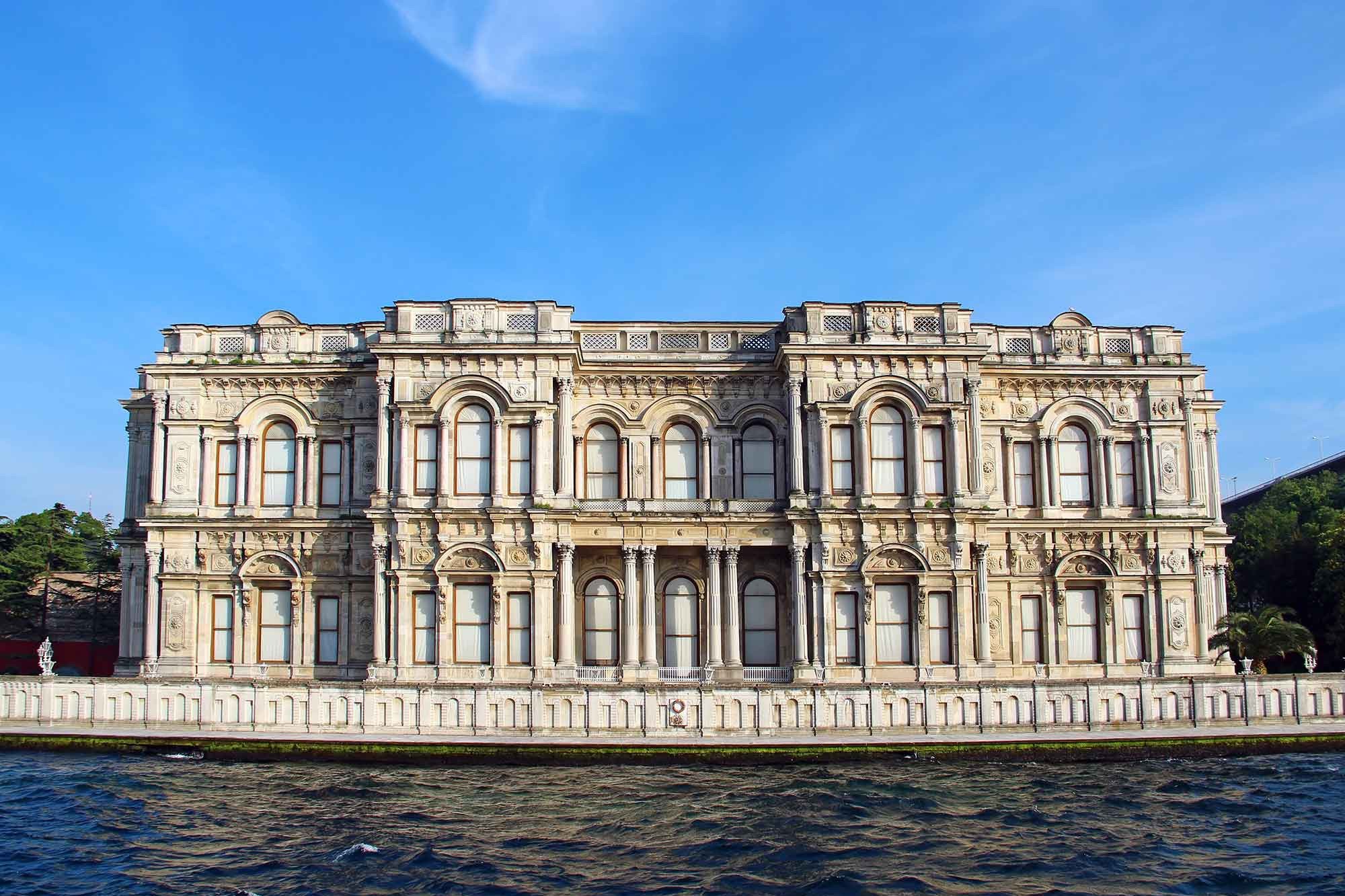
Standing directly beside the Bosphorus on the Asian side of Istanbul, Beylerbeyi Palace is one of the most elegant imperial residences of the late Ottoman period.
Built during the reign of Sultan Abdulaziz in the 19th century, the palace served primarily as a summer residence and as an impressive setting for receiving foreign rulers, diplomats, and distinguished guests.
Compared with the monumental scale of Dolmabahce Palace, Beylerbeyi offers a more intimate experience. Its waterfront location, refined interiors, landscaped gardens, marble pavilions, and views across the Bosphorus reveal another side of Ottoman court life during the empire’s final century.
The palace also reflects the cultural transformation of the Ottoman dynasty in the 19th century, when European architectural and decorative influences increasingly appeared alongside traditional Ottoman concepts of palace organization.
Where Is Beylerbeyi Palace?
Beylerbeyi Palace is located in the Beylerbeyi district of Uskudar, directly on the Asian shore of the Bosphorus.
Its position is one of the most attractive of any Ottoman palace in Istanbul.
From the palace gardens and waterfront terraces, visitors can look across the Bosphorus toward the European side of the city.
Today, the palace stands close to the 15 July Martyrs Bridge, formerly known as the Bosphorus Bridge, creating a striking contrast between 19th-century Ottoman architecture and modern Istanbul.
The location also made the palace convenient for receiving visitors arriving by sea.
What Does Beylerbeyi Mean?
The name Beylerbeyi comes from an important Ottoman administrative title.
A beylerbeyi was a high-ranking provincial governor whose title can be translated approximately as “Bey of Beys” or governor-general.
The district became associated with this title centuries before the construction of the present palace.
Over time, the Bosphorus shoreline around Beylerbeyi developed into an important area for imperial gardens, mansions, pavilions, and residences.
The present palace continued this long tradition of Ottoman settlement along the Asian shore.
Imperial Residences Before the Present Palace
The site of Beylerbeyi Palace had been connected with the Ottoman court long before the present building was constructed.
Earlier sultans established gardens, pavilions, and waterfront residences in the area.
Like many locations along the Bosphorus, these buildings were altered, rebuilt, damaged, or replaced over time.
By the 19th century, the Ottoman dynasty increasingly preferred residences along the Bosphorus.
The construction of a new palace at Beylerbeyi formed part of this wider transformation in imperial life.
Sultan Abdulaziz and Beylerbeyi Palace
The present palace was commissioned by Sultan Abdulaziz, who ruled the Ottoman Empire from 1861 to 1876.
Abdulaziz succeeded his brother Sultan Abdulmecid I, the ruler responsible for the construction of Dolmabahce Palace.
The two reigns belonged to a period when the Ottoman Empire was undergoing major administrative, military, technological, cultural, and architectural changes.
European influence was increasingly visible at court, yet Ottoman traditions remained important.
Beylerbeyi Palace reflects this combination particularly well.
When Was Beylerbeyi Palace Built?
The present Beylerbeyi Palace was constructed between 1863 and 1865 during the reign of Sultan Abdulaziz.
The project is associated with Sarkis Balyan and the celebrated Balyan family of Ottoman imperial architects.
The Balyans were responsible for many of the most important buildings constructed in Istanbul during the 19th century.
Their work helped define the appearance of the late Ottoman capital, particularly through imperial palaces, mosques, government buildings, and waterfront residences.
The Balyan Family and Ottoman Architecture
The Balyan family served the Ottoman court across several generations.
Their architecture combined European stylistic influences with the requirements of Ottoman imperial life.
Buildings associated with the family include some of the most recognizable monuments of 19th-century Istanbul.
At Beylerbeyi Palace, European architectural vocabulary appears in the symmetry, monumental facade, interior decoration, furniture, and ceremonial spaces.
Yet the palace remained an Ottoman imperial residence in both function and organization.
This combination makes Beylerbeyi particularly valuable for understanding the architectural identity of the late Ottoman period.
A Palace Designed for Summer
Unlike Dolmabahce Palace, which became a major administrative residence of the Ottoman sultans, Beylerbeyi Palace was designed primarily as a summer palace.
Its waterfront location provided a cooler and more comfortable environment during Istanbul’s warmer months.
The Bosphorus naturally shaped life within the palace.
Sea breezes, gardens, terraces, fountains, and waterfront pavilions created a very different atmosphere from the dense urban environment of the historic peninsula.
The palace was therefore both a royal residence and a place of retreat.
A Palace for Foreign Guests
One of the most important functions of Beylerbeyi Palace was the accommodation and reception of distinguished foreign visitors.
During the 19th century, diplomacy became increasingly important as the Ottoman Empire interacted closely with European powers and other states.
Foreign emperors, kings, princes, and political figures visiting Istanbul could be received or accommodated within imperial palaces.
Beylerbeyi became particularly well suited to this purpose because of its elegant interiors and impressive location on the Bosphorus.
The palace therefore functioned as a stage for Ottoman diplomacy as well as imperial life.
Empress Eugenie of France
One of the most famous visitors associated with Beylerbeyi Palace was Empress Eugenie of France, wife of Napoleon III.
She visited Istanbul in 1869 during a period of intensive diplomatic contact between the Ottoman Empire and European powers.
Her stay became one of the best-known episodes in the history of Beylerbeyi Palace.
The visit illustrates the increasingly international character of the Ottoman court during the 19th century.
Foreign rulers and royal families were no longer distant figures.
They could become personal guests of the Ottoman dynasty within the palaces of Istanbul.
Other Royal Visitors
Beylerbeyi Palace hosted numerous distinguished international visitors during the late Ottoman period.
Among the rulers and royal figures associated with the palace were members of European and Asian dynasties visiting Istanbul for diplomatic or ceremonial purposes.
Their presence reflects the importance of the Ottoman capital within 19th-century international politics.
Istanbul remained one of the great diplomatic centers connecting Europe, the Mediterranean, the Middle East, and Asia.
Beylerbeyi was one of the architectural settings in which that diplomacy was conducted.
Architecture of Beylerbeyi Palace
Beylerbeyi Palace combines European architectural influences with Ottoman palace traditions.
Its exterior has a restrained monumental appearance compared with the more elaborate waterfront facade of Dolmabahce.
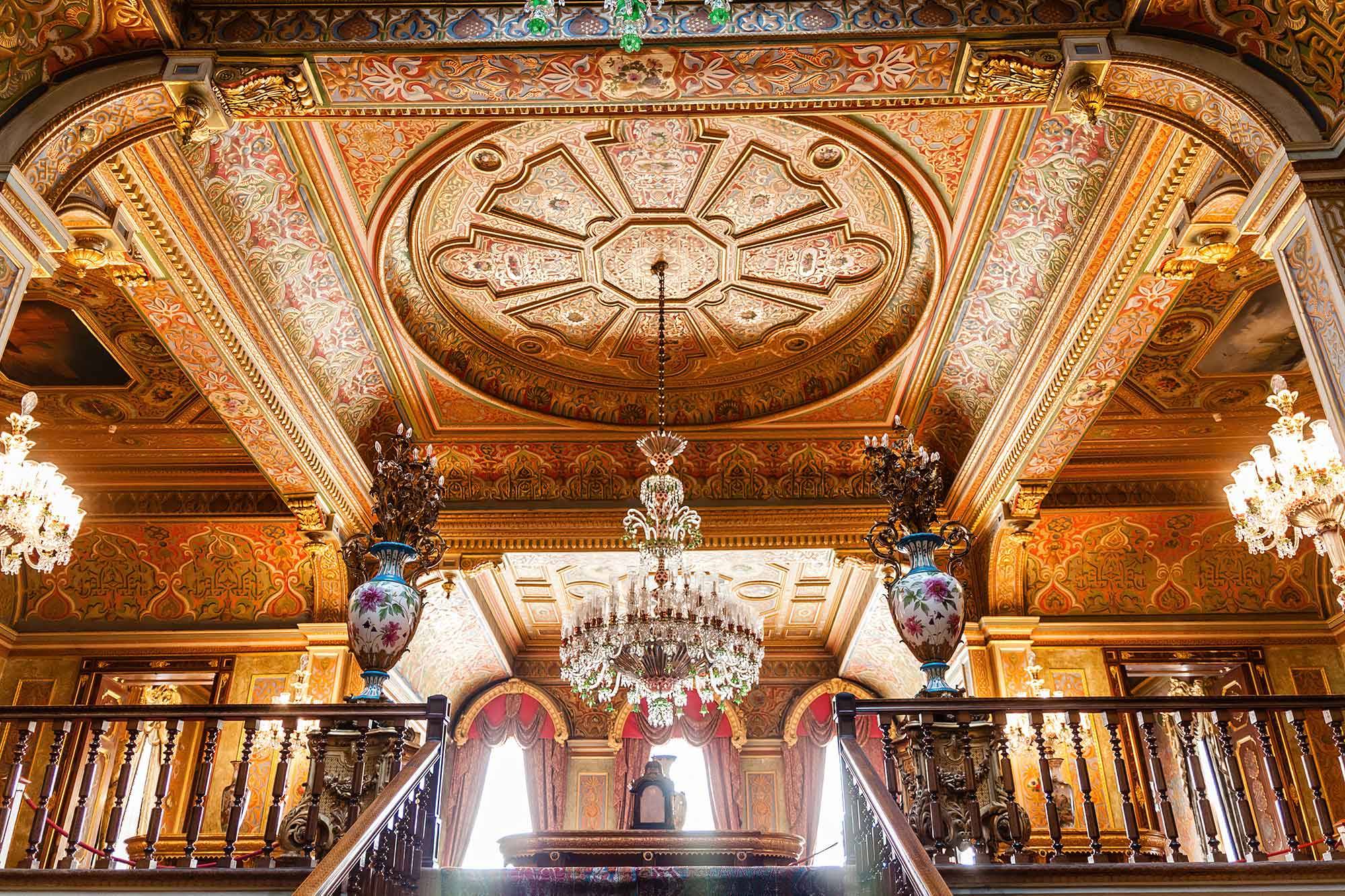
Inside, however, visitors encounter richly decorated reception rooms, salons, staircases, chandeliers, carpets, furniture, painted ceilings, and ornamental details.
The contrast between the relatively balanced exterior and the richly decorated interior is one of the palace’s most appealing characteristics.
The Waterfront Facade
The facade facing the Bosphorus is one of Beylerbeyi Palace’s defining features.
The palace stretches parallel to the water, creating a direct relationship between architecture and the strait.
Waterfront gates allowed visitors to approach the palace by boat.
For members of the Ottoman court, the Bosphorus functioned almost like an imperial avenue.
Palaces, mansions, mosques, gardens, and villages lined both shores, and travel by caique or imperial boat could be more practical and prestigious than traveling through crowded city streets.
The Bosphorus as Part of Palace Life
It is difficult to understand Beylerbeyi without understanding the importance of the Bosphorus.
For centuries, the strait shaped the geography, economy, defense, and social life of Istanbul.
During the Ottoman period, the shores became increasingly desirable locations for imperial residences and elite mansions.
The Bosphorus offered beautiful views, cooler summer temperatures, direct maritime transportation, and distance from the crowded historic center.
At Beylerbeyi, the water is not simply scenery.
It is an essential part of the palace’s design and history.
The Selamlik
Like other Ottoman imperial residences, Beylerbeyi included areas associated with the official duties of the sultan.
The Selamlik was connected with state functions, official receptions, and male members of the court.
Rooms used for receiving important visitors were designed to communicate imperial prestige.
Furniture, chandeliers, carpets, decorative ceilings, and other objects created an environment appropriate for diplomatic and ceremonial occasions.
The Harem
The palace also included a Harem section associated with the private residential life of the imperial family.
The Ottoman Harem was not simply an entertainment space, as it was often imagined in European Orientalist literature.
It was the private domestic section of the imperial household.
Members of the dynasty, including women, children, attendants, and other members of the palace community, lived within a highly structured social environment.
The Harem at Beylerbeyi reflects this private aspect of imperial life.
The Ceremonial Hall
Among the most impressive spaces inside Beylerbeyi Palace are its ceremonial and reception halls.
These rooms demonstrate the international decorative language adopted by the Ottoman court in the 19th century.
Large chandeliers, European-style furniture, elaborate ceilings, carpets, mirrors, and carefully composed interiors created impressive spaces for receiving guests.
Yet Ottoman elements remained present in the organization and symbolism of the palace.
The result is an architecture that belongs to neither Europe nor traditional Ottoman design alone.
The Blue Hall
One of the best-known interiors of Beylerbeyi Palace is often referred to as the Blue Hall.
The room takes its name from the dominant blue tones used in its decoration.
Its scale and ornamentation demonstrate the ceremonial character of the palace.
Columns, decorative surfaces, chandeliers, and carefully arranged furnishings contribute to one of the most memorable interiors within the residence.
The hall also reflects the late Ottoman preference for richly decorated reception spaces intended to impress distinguished visitors.
The Hall with the Pool
One of the most distinctive features of Beylerbeyi Palace is the presence of an interior hall associated with a central pool or fountain.
Water was an important element in Ottoman architectural traditions.
Fountains and pools could provide cooling, sound, movement, and visual beauty.
At Beylerbeyi, this traditional appreciation of water is incorporated into the interior of a 19th-century imperial palace influenced by European architecture.
The result is one of the clearest examples of Ottoman and European traditions existing together within the same building.
Water and Ottoman Architecture
Water played an important role in Ottoman palaces, gardens, mosques, houses, and public spaces.
Its significance was both practical and aesthetic.
Running water helped cool interiors during warmer weather, while the sound of fountains created a calm atmosphere.
Water was also culturally associated with cleanliness, gardens, paradise imagery, and hospitality.
At Beylerbeyi Palace, fountains and pools contribute to the sense that this was a residence designed partly for relaxation away from the formal administrative environment of the city.
The Imperial Gardens
The gardens surrounding Beylerbeyi Palace are an important part of the complex.
Terraces rise behind the main palace while gardens, trees, pavilions, and ornamental structures create a landscaped setting overlooking the Bosphorus.
The relationship between palace and garden was particularly important in Ottoman residential architecture.
Even when buildings incorporated increasingly European decorative styles, the court continued to value gardens, waterfront terraces, fountains, and outdoor spaces as essential components of imperial life.
The Marble Pavilion
The wider Beylerbeyi complex includes smaller imperial structures and pavilions.
Among these is the Marble Pavilion, associated with earlier phases of imperial development on the site.
Such pavilions reflect the Ottoman tradition of constructing specialized buildings within large palace gardens.
Rather than concentrating every activity inside a single monumental residence, imperial complexes could contain multiple structures used for relaxation, receptions, hunting, dining, or private retreat.
The Yellow Pavilion
Another structure within the palace grounds is traditionally known as the Yellow Pavilion.
Like other auxiliary buildings, it demonstrates that Beylerbeyi should be understood as a broader imperial landscape rather than only a single palace.
The surrounding pavilions, gardens, terraces, and waterfront structures all contributed to the way the Ottoman dynasty experienced the site.
The Stable Pavilion
The palace complex also contained facilities associated with horses and transportation.
The Stable Pavilion reflects the practical infrastructure required to support an imperial residence.
Palaces required far more than ceremonial rooms.
They depended upon servants, kitchens, storage, transportation, guards, maintenance staff, gardens, animals, and extensive logistical organization.
Buildings such as the stables provide insight into the everyday operation of imperial life.
Sultan Abdulaziz and the Arts
Sultan Abdulaziz had strong personal interests beyond politics.
He was known for his interest in painting, music, physical activity, and maritime subjects.
His reign also coincided with increasing cultural interaction between the Ottoman Empire and Europe.
He became the first Ottoman sultan to make a major diplomatic journey to Western Europe.
This broader engagement with European royal culture formed part of the environment in which palaces such as Beylerbeyi were constructed.
Sultan Abdulaziz Visits Europe
In 1867, Sultan Abdulaziz traveled to Europe and visited several major capitals.
The journey was highly unusual for an Ottoman ruler and demonstrated the changing diplomatic culture of the 19th century.
He met European monarchs and observed royal courts, architecture, industry, and institutions.
The visit occurred only a few years after Beylerbeyi Palace was completed.
The palace therefore belongs to a period when the Ottoman dynasty was increasingly participating directly in the diplomatic culture of European royal families.
Beylerbeyi and Dolmabahce Palace
Beylerbeyi and Dolmabahce Palace were constructed within the same broad period of late Ottoman transformation, but they served somewhat different purposes.
Dolmabahce was larger and became a principal administrative and ceremonial residence.
Beylerbeyi functioned more as a summer palace and a prestigious residence for foreign guests.
Both demonstrate European influences and the work of the Balyan architectural tradition.
Visiting both provides an excellent introduction to the changing lifestyle of the Ottoman dynasty during the 19th century.
Sultan Abdulhamid II at Beylerbeyi Palace
One of the most important later chapters in the history of Beylerbeyi Palace concerns Sultan Abdulhamid II.
Abdulhamid ruled the Ottoman Empire from 1876 to 1909.
For much of his reign, he preferred Yildiz Palace rather than Dolmabahce or Beylerbeyi.
After being deposed in 1909, he was initially sent away from Istanbul.
He later returned to the city and spent the final years of his life at Beylerbeyi Palace.
The Final Years of Abdulhamid II
Abdulhamid II lived at Beylerbeyi under restricted circumstances rather than as the reigning sultan.
The former ruler who had once governed the Ottoman Empire from Yildiz Palace spent his final years within the quieter environment of Beylerbeyi.
He died there in 1918.
This association gives the palace a very different historical character from its original role as a summer residence and diplomatic guest palace.
It became the final home of one of the most controversial and influential Ottoman rulers of the modern era.
Beylerbeyi in the Final Ottoman Period
By the early 20th century, the Ottoman Empire was undergoing enormous political change.
Constitutional movements, military conflicts, nationalist movements, international pressure, and war transformed imperial institutions.
Palaces that had once represented the confidence of the dynasty became witnesses to its decline.
Beylerbeyi’s history therefore spans both the prestige of the mid-19th-century Ottoman court and the difficult final decades of the empire.
Beylerbeyi Palace After the Ottoman Empire
Following the end of the Ottoman dynasty and the establishment of the Republic of Turkey, Beylerbeyi Palace was preserved as an important historic monument.
Over time, it became accessible to the public as part of Turkey’s collection of historic national palaces.
Today, its interiors, gardens, furniture, decorative arts, and Bosphorus setting allow visitors to experience the atmosphere of the late Ottoman imperial world.
Beylerbeyi Palace or Dolmabahce Palace?
Visitors sometimes wonder whether they should visit Beylerbeyi Palace or Dolmabahce Palace.
The two offer different experiences.
Dolmabahce is far larger and more monumental. Its Ceremonial Hall, Crystal Staircase, extensive apartments, and political importance make it one of Istanbul’s principal imperial attractions.
Beylerbeyi is smaller, quieter, and more intimate.
Its greatest strengths are its elegant interiors, summer-palace atmosphere, Bosphorus location, and connection with foreign royal guests and Sultan Abdulhamid II.
Visitors particularly interested in 19th-century Ottoman history may find that seeing both creates a much richer understanding of the period.
Beylerbeyi Palace or Topkapi Palace?
The difference between Beylerbeyi and Topkapi Palace is even greater.
Topkapi represents the classical Ottoman imperial world from the 15th century onward.
Its courtyards, Imperial Council, Treasury, Sacred Relics, pavilions, and Harem reflect a palace system developed during the empire’s rise and classical age.
Beylerbeyi belongs to the 19th century, when the Ottoman dynasty was living in waterfront palaces furnished and decorated according to increasingly European tastes.
Visiting the two palaces reveals how dramatically Ottoman court life changed over several centuries.
Visiting Beylerbeyi Palace Today
Beylerbeyi Palace is open to visitors as a historic palace and requires an entrance ticket.
The visit generally includes the principal interiors of the main palace, although access to individual rooms or sections may occasionally change because of restoration, official events, conservation requirements, or operational arrangements.
Because the palace is smaller than Dolmabahce or Topkapi, it can be incorporated relatively easily into a half-day or full-day itinerary exploring the Asian side of Istanbul or the Bosphorus.
Tickets and Entrance
Entrance to Beylerbeyi Palace is ticketed.
For guests joining Eskinazi Tours & Events private tours, entrance tickets can be arranged and prepaid in advance.
This helps reduce time spent purchasing tickets on site and allows the palace to be incorporated more efficiently into the day’s itinerary.
Prepaid tickets do not bypass mandatory security procedures or visitor controls required by the palace administration.
Photography and Palace Rules
Beylerbeyi contains historic furniture, decorative objects, carpets, paintings, and fragile interiors.
Visitor regulations are therefore more controlled than at many outdoor monuments.
Photography rules may vary between interior and exterior areas and may change according to current palace regulations.
Visitors should follow the instructions of palace staff and respect any restrictions applied inside the historic rooms.
How Much Time Should You Allow?
A typical visit to Beylerbeyi Palace generally requires approximately one to one and a half hours.
Visitors with a strong interest in Ottoman history, palace architecture, decorative arts, or Sultan Abdulhamid II may wish to spend longer.
Additional time can also be worthwhile for enjoying the gardens and Bosphorus views when accessible.
Combine Beylerbeyi Palace with the Asian Side of Istanbul
Beylerbeyi is particularly well suited to an itinerary exploring the Asian side of Istanbul.
A private tour can combine the palace with areas such as Uskudar, Kuzguncuk, Kadikoy, or other neighborhoods along the Asian shore.
This creates an opportunity to experience Istanbul beyond the historic peninsula and see how life developed on both sides of the Bosphorus.
The Asian side also offers a different urban atmosphere from the more heavily visited areas around Sultanahmet and Taksim.
Combine Beylerbeyi Palace with a Bosphorus Cruise
Because of its waterfront location, Beylerbeyi Palace can also be combined naturally with a private Bosphorus cruise.
Viewing the palace from the water helps visitors appreciate why the Bosphorus became such an important residential landscape for the Ottoman dynasty.
A cruise also reveals other imperial palaces, mansions, fortresses, mosques, and waterfront neighborhoods along both shores.
Combining the palace with the Bosphorus therefore provides both an interior and exterior perspective on Ottoman imperial Istanbul.
Visiting Beylerbeyi Palace with a Private Guide
Beylerbeyi Palace becomes far more meaningful when understood within the wider transformation of the Ottoman Empire during the 19th century.
With your own licensed private guide, you can explore why the Ottoman dynasty increasingly moved toward Bosphorus residences, how European architectural influences entered the imperial court, and how palaces such as Beylerbeyi reflected changing diplomatic and cultural priorities.
Your guide can also explain the reigns of Sultan Abdulaziz and Sultan Abdulhamid II, the palace’s role in hosting international guests, and the development of late Ottoman architecture.
Rather than simply viewing elegant rooms, the visit becomes part of the larger story of an empire adapting to a rapidly changing world.
Discover Beylerbeyi Palace as Part of Your Private Istanbul Tour
Explore one of the most elegant imperial residences on the Bosphorus and discover the world of the late Ottoman court.
Walk through the refined rooms of Beylerbeyi Palace, learn about Sultan Abdulaziz and the transformation of Ottoman architecture, discover the palace’s role in hosting foreign royalty, and hear the story of Sultan Abdulhamid II’s final years.
With Eskinazi Tours & Events, Beylerbeyi Palace can be incorporated into a personalized private tour focusing on Ottoman history, the Asian side of Istanbul, imperial architecture, or the Bosphorus.
Entrance tickets can be arranged and prepaid in advance, helping the visit fit smoothly into your private itinerary.
Contact us to create a personalized private tour of Istanbul and discover the history, architecture, and remarkable Bosphorus setting of Beylerbeyi Palace.