

Discover the Historic Heart of Beyoglu and the Cosmopolitan World of Ottoman Istanbul
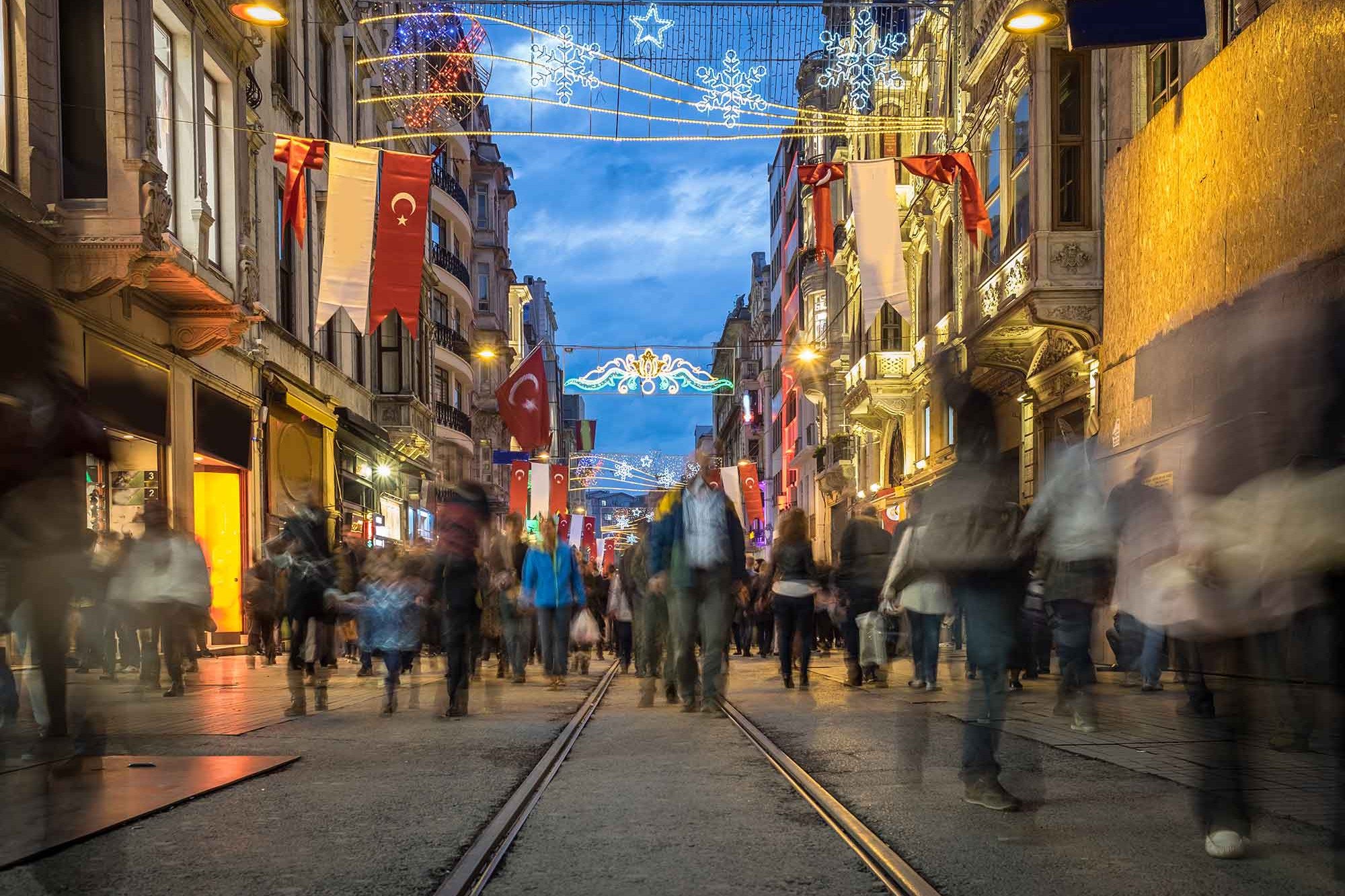
Stretching from Taksim Square toward Tunel, Istiklal Street is one of Istanbul’s most famous avenues and one of the best places to experience the city’s remarkably diverse cultural heritage.
Today, Istiklal is filled with shops, restaurants, cafes, historic passages, consulates, churches, galleries, bookstores, and entertainment venues. Yet behind its modern energy lies a fascinating history shaped by the transformation of the districts once known as Pera and Galata.
During the 19th century, this area became one of the most cosmopolitan parts of the Ottoman capital. European diplomats, Levantine families, Greek Orthodox Christians, Armenians, Catholics, Protestants, Jews, merchants, bankers, artists, and intellectuals lived and worked in the surrounding neighborhoods.
Historic churches such as Hagia Triada Greek Orthodox Church, St. Anthony of Padua Church, and Santa Maria Draperis Church remain among the clearest reminders of this multicultural past.
For this reason, Istiklal Street is not simply a modern shopping avenue. It is one of the most revealing places for understanding the religious, social, architectural, and cultural transformation of Istanbul during the final centuries of the Ottoman Empire.
Where Is Istiklal Street?
Istiklal Street runs through the modern district of Beyoglu on the European side of Istanbul.
It begins near Taksim Square and continues for approximately 1.4 kilometers toward Tunel Square.
From Tunel, the streets descend toward Galata Tower, Karakoy, and the Golden Horn.
This location connects several historically important districts.
To the north lies Taksim and the modern city center. To the south are Galata and Karakoy, which developed for centuries around maritime trade and international commerce.
Istiklal Street grew between these worlds and became the principal avenue of the cosmopolitan district historically known as Pera.
From Pera to Beyoglu
Before the street became known as Istiklal Avenue, the surrounding district was generally associated with the name Pera.
The name was used particularly by Europeans and Levantines for the neighborhoods developing beyond the historic Genoese settlement of Galata.
During the Ottoman period, the area was also increasingly known as Beyoglu.
By the 19th century, Pera had become one of the most fashionable and internationally connected districts in Istanbul.
Embassies, consulates, hotels, churches, schools, theaters, restaurants, clubs, apartments, banks, shops, and cultural institutions transformed the neighborhood.
The avenue that became modern Istiklal Street stood at the center of this new urban world.
Grande Rue de Pera
During the 19th and early 20th centuries, the street was widely known by its French name, Grande Rue de Pera, meaning the Great Street of Pera.
French was an important diplomatic and cultural language of the period, particularly among European institutions and parts of the Ottoman elite.
The use of a French name reflected the international character of the district.
Visitors walking along the avenue encountered architecture and institutions unlike those of the historic peninsula.
European-style apartment buildings, churches, embassies, arcades, hotels, shops, and theaters created an urban environment that appeared strikingly modern by the standards of the period.
The Transformation of 19th-Century Istanbul
The development of Pera accelerated dramatically during the 19th century.
The Ottoman Empire was undergoing major administrative and social reforms, particularly during the Tanzimat era.
At the same time, diplomatic relations and international trade were expanding.
Foreign embassies established themselves in the area, while European merchants, bankers, Levantine families, and Ottoman non-Muslim communities became increasingly prominent within the commercial life of Galata and Pera.
New forms of transportation, communication, architecture, banking, entertainment, and urban planning gradually changed the appearance of Istanbul.
Istiklal Street became one of the clearest expressions of this transformation.
Embassies and European Diplomacy
Several European powers maintained important diplomatic institutions in and around Pera.
The district became closely associated with international diplomacy because foreign representatives preferred the hills above Galata rather than the more densely populated historic peninsula.
Large embassy complexes, consulates, churches, schools, and residences appeared throughout the neighborhood.
Some former embassy compounds continue today as consulates or cultural institutions.
Their presence helps explain why the surrounding streets contain such a remarkable concentration of European architectural styles and Christian churches.
Levantines of Istanbul
The history of Istiklal Street is also closely connected with the Levantine communities of Ottoman Istanbul.
The term Levantine was commonly used for families of European background who had settled in Ottoman port cities, sometimes for many generations.
They often spoke several languages and participated actively in commerce, diplomacy, shipping, banking, and cultural life.
Catholic churches, schools, hospitals, commercial establishments, and social institutions served these communities.
The architectural and cultural character of Pera developed partly through this interaction between Ottoman society and long-established European communities.
Greek Orthodox Communities of Pera
Greek Orthodox Christians were another major part of the social fabric of Beyoglu.
Although the Ecumenical Patriarchate remained centered in Fener, Greek communities lived throughout Istanbul.
During the 19th century, prosperous Greek merchants, professionals, craftsmen, and families became particularly visible in Galata and Pera.
Churches, schools, charitable institutions, residences, and commercial buildings reflected the community’s presence.
One of the most impressive surviving monuments of this history is the Hagia Triada Greek Orthodox Church near Taksim Square.
Armenian Heritage of Beyoglu
Armenian Christians also played an important role in the development of Pera and Galata.
Ottoman Armenian architects, merchants, craftsmen, artists, bankers, and intellectuals contributed significantly to the cultural life of the district.
The area contains Armenian churches and institutions associated with both the Armenian Apostolic and Armenian Catholic traditions.
The famous Balyan family, responsible for major Ottoman monuments such as Dolmabahce and Beylerbeyi palaces, emerged from this wider Armenian architectural world.
The history of Istiklal Street therefore cannot be separated from the broader Armenian contribution to late Ottoman Istanbul.
Catholic Life in Pera
Pera also became the most important center of Roman Catholic life in Istanbul.
Catholic communities included Italians, French, Levantines, diplomats, merchants, clergy, and local Christians connected with different Catholic traditions.
Several important Catholic churches were established in and around the avenue.
Among them, St. Anthony of Padua Church and Santa Maria Draperis Church remain two of the most important Catholic landmarks in Istanbul.
Their presence makes Istiklal Street especially valuable for visitors exploring the Christian heritage of the city.
Istiklal Street and Christian Heritage Tours in Istanbul
Istiklal Street is one of the most important areas for Christian Heritage Tours in Istanbul.
Visitors often associate Istanbul’s Christian history primarily with the Byzantine period and monuments such as Hagia Sophia, Chora Church, and Hagia Irene.
However, Christianity in Istanbul did not end with the Ottoman conquest of Constantinople in 1453.
Christian communities continued to live, worship, establish churches, operate schools, maintain charitable institutions, and contribute to the cultural and economic life of the Ottoman capital.
Istiklal Street is one of the best places to discover this continuing Christian presence.
Within a relatively short walk, visitors can encounter Greek Orthodox, Roman Catholic, Armenian, and Protestant traditions, revealing a Christian history extending from Byzantine Constantinople into the Ottoman period and modern Istanbul.
Christianity After the Fall of Constantinople
The Ottoman conquest transformed Constantinople politically and religiously, but it did not eliminate its Christian communities.
Greek Orthodox Christians remained under the spiritual leadership of the Ecumenical Patriarchate.
Armenian Christians developed their own institutions within the Ottoman capital.
Catholic communities associated with Genoese, Venetian, French, Italian, and Levantine populations continued to worship in Galata and Pera.
Later, Protestant churches and missions also appeared.
The churches around Istiklal Street therefore provide an important corrective to the idea that Istanbul’s Christian heritage belongs only to the Byzantine past.
Christianity remained an important part of the city’s social and religious landscape throughout the Ottoman centuries.
Hagia Triada Greek Orthodox Church
Standing close to Taksim Square, Hagia Triada Greek Orthodox Church is one of the most impressive Orthodox churches in modern Istanbul.
Its name means the Holy Trinity.
The present church was constructed during the 19th century and officially opened in 1880, during a period when Ottoman regulations concerning the construction of non-Muslim places of worship had become less restrictive.
Its prominent location and monumental architecture reflected the confidence and prosperity of the Greek Orthodox community of Pera at the time.
The Architecture of Hagia Triada
Hagia Triada is particularly striking because of its monumental facade, twin bell towers, large dome, and richly decorated interior.
Its architecture combines elements inspired by Byzantine and European church traditions.
The church represents a very different period from medieval Byzantine monuments such as Hagia Sophia.
Rather than belonging to imperial Constantinople, it reflects the world of the Christian communities living in 19th-century Ottoman Istanbul.
This makes the church especially valuable on a Christian heritage tour because it demonstrates the continuity and evolution of Orthodox Christianity in the city.
Inside Hagia Triada
The interior follows the liturgical traditions of Eastern Orthodox Christianity.
Icons, chandeliers, marble decoration, religious paintings, and the iconostasis create the visual environment of Orthodox worship.
The iconostasis separates the sanctuary from the nave and contains images of Christ, the Virgin Mary, saints, and biblical events.
For visitors unfamiliar with Orthodox Christianity, the church provides an opportunity to learn how architecture, icons, liturgy, and theology come together within the Orthodox tradition.
St. Anthony of Padua Church
Farther along Istiklal Street stands the magnificent St. Anthony of Padua Church.
It is one of the largest and most important Roman Catholic churches in Istanbul.
The present building was constructed in the early 20th century and was completed in 1912.
Its striking red-brick facade and Gothic-inspired architectural design make it one of the most recognizable buildings along Istiklal Street.
The church continues to serve Istanbul’s Catholic community today.
The Franciscan Presence in Istanbul
St. Anthony of Padua is associated with the Franciscan tradition.
Catholic religious orders had maintained a presence in Constantinople and Galata for centuries, particularly through connections with Italian maritime communities.
Franciscans played an important role in serving Catholic residents, merchants, travelers, and diplomats.
The present St. Anthony Church represents the continuation of this much older Catholic presence within Istanbul.
Its history therefore reaches beyond the construction date of the modern building.
Architecture of St. Anthony of Padua
The church was designed in a Neo-Gothic style associated particularly with European ecclesiastical architecture.
Pointed arches, stained glass, vertical lines, decorative brickwork, and a spacious basilica interior distinguish the church from the Ottoman mosques and Byzantine churches found elsewhere in Istanbul.
This architectural contrast is one of the reasons Istiklal Street is so valuable for understanding the diversity of the city.
Within a relatively small area, visitors can encounter architectural traditions associated with Orthodox Christianity, Roman Catholicism, Ottoman Islam, European commercial architecture, and modern Turkish urban life.
Pope John XXIII and St. Anthony
One of the most important modern Christian figures associated with the church is Angelo Giuseppe Roncalli, who later became Pope John XXIII.
Before becoming pope, Roncalli served as a Vatican diplomat in Turkey during the 1930s and 1940s.
During his years in Istanbul, he participated in Catholic life in the city and became well known for his warm relationship with Turkish society.
His connection with St. Anthony remains an important part of the church’s modern history.
Roncalli later became pope in 1958 and called the Second Vatican Council, one of the most important events in modern Catholic history.
Santa Maria Draperis Church
Another important Catholic church along Istiklal Street is Santa Maria Draperis Church.
Although its present entrance is relatively modest compared with St. Anthony, its history is considerably older.
The Franciscan community connected with Santa Maria Draperis traces its roots in Istanbul back several centuries.
The church survived repeated relocations, fires, political changes, and rebuilding before becoming established in its present location.
It therefore represents one of the strongest surviving connections between modern Beyoglu and the older Catholic history of Galata and Pera.
The Origins of Santa Maria Draperis
The history of Santa Maria Draperis is associated with the Franciscan community of Constantinople and Galata.
The name “Draperis” is traditionally connected with a benefactor who provided a house for the community after an earlier church was lost.
Over the centuries, the congregation experienced several fires and relocations.
The present church dates largely from the 18th and 19th centuries, with later restoration and alterations.
Its survival reflects the extraordinary continuity of Catholic worship in Istanbul through periods of profound political and social change.
Inside Santa Maria Draperis
The church is reached from Istiklal Street through an entrance leading downward from street level.
This arrangement gives the church a very different character from the monumental facade of St. Anthony.
Inside, visitors encounter an intimate Catholic sanctuary decorated with religious paintings, altars, statues, and devotional images.
The church remains active and continues to serve the Catholic community.
Its quiet atmosphere can provide a striking contrast with the crowds and commercial activity immediately outside on Istiklal Street.
Three Churches, Three Different Christian Stories
Visiting Hagia Triada, St. Anthony of Padua, and Santa Maria Draperis together provides an excellent introduction to the diversity of Christianity in Istanbul.
Hagia Triada represents the Greek Orthodox tradition and the flourishing Orthodox community of 19th-century Pera.
St. Anthony reflects the strong Roman Catholic and Franciscan presence of the late Ottoman and modern periods.
Santa Maria Draperis connects visitors with a much older Catholic tradition extending back through the history of Galata and Constantinople.
Together, these churches reveal that Christian Istanbul is not limited to one denomination or one historical period.

A Different Chapter from Byzantine Christianity
A Christian heritage itinerary in Istanbul often begins with the great monuments of Byzantine Constantinople.
Hagia Sophia reveals the imperial church of Justinian.
Chora Church preserves extraordinary Byzantine mosaics and frescoes.
Hagia Irene represents one of the ancient churches of the imperial capital.
The churches of Istiklal Street tell a different story.
They reveal how Christian communities adapted and continued after Constantinople became the Ottoman capital.
Including both Byzantine monuments and the churches of Pera therefore creates a more complete understanding of almost two thousand years of Christian history in Istanbul.
Religious Diversity Along Istiklal Street
Christian institutions were only one part of the religious diversity of Beyoglu.
Muslims, Jews, Christians of several denominations, foreign communities, and migrants from across the Ottoman Empire lived within the wider district.
Mosques, churches, synagogues, schools, hospitals, diplomatic institutions, and charitable foundations often existed within walking distance of one another.
This diversity is one of the defining characteristics of late Ottoman Istanbul.
Istiklal Street remains one of the best places to explore the physical traces of this multicultural world.
The Historic Passages of Istiklal Street
Istiklal Street is also famous for its historic passages.
These arcades developed particularly during the 19th century and contained shops, cafes, restaurants, theaters, apartments, and entertainment venues.
Some passages were built after fires destroyed earlier structures, while others reflected new European ideas about commercial architecture.
Their names and functions changed over time, but several remain important landmarks along the avenue.
Exploring these passages helps visitors imagine the social life of Pera during its most cosmopolitan period.
Cicek Pasaji
One of the best-known historic passages is Cicek Pasaji, or the Flower Passage.
The present structure developed on the site of the former Naum Theatre, one of the important cultural institutions of 19th-century Pera.
After the theater was destroyed by fire, a new commercial building was constructed on the site.
Over time, the passage became associated with flower sellers and later restaurants and taverns.
Today, its elaborate interior architecture makes it one of the most recognizable landmarks on Istiklal Street.
Naum Theatre and the Cultural Life of Pera
Before Cicek Pasaji, the site was occupied by the famous Naum Theatre.
During the 19th century, the theater hosted opera and theatrical performances and became an important center of cultural life in Ottoman Istanbul.
European diplomats, Ottoman officials, Levantines, and members of the city’s elite attended performances there.
The theater illustrates how Pera introduced forms of European-style public entertainment that were increasingly popular within the changing Ottoman capital.
Its history also demonstrates that Istiklal Street was as important culturally as it was commercially.
Avrupa Pasaji
The Avrupa Pasaji, or European Passage, is another historic arcade connected with the commercial development of Pera.
Its architecture reflects the European influence that shaped much of the district during the late Ottoman period.
Shops arranged within covered passages offered a new style of urban shopping quite different from the traditional commercial environment of the Grand Bazaar.
These buildings demonstrate how Istanbul incorporated new architectural and commercial models while older forms of urban life continued elsewhere in the city.
Atlas Passage
The Atlas Passage is another significant historic complex along Istiklal Street.
Originally associated with a 19th-century mansion, the building later developed into an important cultural and entertainment venue.
Its subsequent history included cinema, theater, and commercial spaces.
Today, the restored complex continues to reflect the long association between Istiklal Street and Istanbul’s cultural life.
Cinema and Theater on Istiklal Street
During the late Ottoman and Republican periods, Beyoglu became one of Istanbul’s principal centers for theater and cinema.
Entertainment venues attracted audiences from across the city.
Istiklal Street became associated with movie theaters, performances, music halls, cafes, and nightlife.
This cultural role continued through much of the 20th century.
Although the character of the street has changed considerably, it remains an important entertainment district today.
Hotels and International Travelers
Pera was also the district where many international travelers stayed.
The arrival of modern transportation and increasing numbers of European visitors created demand for hotels modeled on those of major European capitals.
The most famous example is the Pera Palace Hotel, located a short distance from Istiklal Street.
Built in the late 19th century, the hotel became associated with passengers arriving on the Orient Express and with writers, diplomats, politicians, and travelers from around the world.
Its history demonstrates how Beyoglu became Istanbul’s principal international quarter.
The Orient Express and Pera
The arrival of the Orient Express strengthened Istanbul’s connection with European capitals.
Travelers could journey by rail across Europe before reaching Constantinople.
Many wealthy passengers stayed in Pera, which offered European-style hotels, restaurants, shops, embassies, and entertainment.
This contributed further to the international atmosphere of the district.
By the late 19th century, a visitor walking along the Grande Rue de Pera could encounter a city that felt remarkably interconnected with Paris, Vienna, London, Rome, and other European centers.
The Historic Tram
One of the most recognizable symbols of Istiklal Street today is the historic red tram.
The nostalgic tram runs between the Taksim and Tunel areas and recalls the development of public transportation in modern Istanbul.
Electric tram services transformed urban mobility around the turn of the 20th century.
Although the present nostalgic service belongs to a later revival, it has become inseparable from the visual identity of Istiklal Street.
The tram also helps connect the modern pedestrian avenue with the memory of its earlier urban life.
Tunel: One of Istanbul’s Historic Transport Systems
At the southern end of Istiklal Street stands Tunel.
Opened in 1875, Tunel is one of the world’s earliest underground urban railway systems.
Its short route connects the steep hill of Pera with Karakoy below.
The construction of Tunel reflects the increasing modernization of Istanbul during the 19th century.
Banks, ports, foreign businesses, and commercial institutions were concentrated around Galata and Karakoy, while residential, diplomatic, and entertainment districts expanded uphill in Pera.
Tunel made movement between these areas considerably easier.
Taksim Square
At the opposite end of Istiklal Street lies Taksim Square.
The word Taksim originally referred to the distribution of water.
Historically, water brought from northern sources was distributed from this area toward different neighborhoods.
The square later developed into one of the principal civic spaces of modern Istanbul.
Today, Taksim serves as a transportation center, meeting point, ceremonial space, and entrance to Istiklal Street.
The Republic Monument
At the center of Taksim Square stands the Republic Monument.
Unveiled in 1928, it commemorates the establishment of the Republic of Turkey and important figures associated with the Turkish War of Independence and the early Republic.
The monument marks another historical layer of the district.
Within a short distance, visitors can therefore encounter Ottoman Christian churches, 19th-century European architecture, modern Republican monuments, and contemporary Istanbul.
Why Was Istiklal Street Renamed?
Following the establishment of the Republic of Turkey, the former Grande Rue de Pera became known as Istiklal Caddesi.
“Istiklal” means Independence.
The new name reflected the political transformation that followed the Turkish War of Independence and the creation of the Republic in 1923.
The renaming marked a new national identity while the street itself continued to preserve much of the architecture inherited from the late Ottoman period.
Architecture Along Istiklal Street
One of the great pleasures of walking along Istiklal Street is looking above the modern storefronts.
Many buildings preserve facades dating from the late Ottoman period.
Architectural styles include Neoclassical, Neo-Gothic, Art Nouveau, Neo-Baroque, and eclectic European influences.
Balconies, bay windows, decorative stonework, ironwork, sculptural details, and elaborate entrances reveal the wealth and international character of the district.
The upper stories often preserve considerably more historical character than the commercial spaces at street level.
A Street of Languages
Historically, visitors to Pera might have heard an extraordinary mixture of languages.
Turkish, Greek, Armenian, French, Italian, Ladino, English, German, and other languages could be heard within the district.
This linguistic diversity reflected the international population of the Ottoman capital.
Merchants needed to communicate across cultural boundaries, diplomats interacted with Ottoman officials, and Christian and Jewish communities maintained their own educational and religious traditions.
Istiklal Street was therefore not simply multicultural visually. It was multicultural in everyday life.
Changes During the 20th Century
The social character of Beyoglu changed dramatically during the 20th century.
Political transformations, population movements, economic pressures, emigration, and difficult periods affecting Istanbul’s minority communities altered the demographic composition of the district.
Many Greek, Armenian, Jewish, and Levantine families who had once contributed to the cosmopolitan character of Pera gradually left Istanbul.
The churches, apartments, passages, schools, and other historic buildings that remain therefore carry the memory of communities that were once much larger.
Understanding this history adds considerable depth to a walk along Istiklal Street.
Istiklal Street Today
Today, Istiklal Street is one of the busiest pedestrian avenues in Istanbul.
International brands, local shops, restaurants, cafes, bookstores, galleries, churches, consulates, entertainment venues, and historic passages attract enormous numbers of visitors.
The street can feel intensely modern and commercial.
Yet just behind the storefronts are layers of Ottoman, Christian, Levantine, diplomatic, and Republican history.
The most rewarding way to experience Istiklal is therefore to look beyond the crowds and explore the buildings, courtyards, churches, passages, and side streets that reveal its past.
Is Istiklal Street Worth Visiting for History?
Yes.
Visitors sometimes approach Istiklal Street simply as a shopping and entertainment district.
For travelers interested in history, however, the avenue offers something very different from Sultanahmet.
Sultanahmet introduces visitors primarily to Byzantine imperial and classical Ottoman monuments.
Istiklal Street reveals the 19th-century Ottoman capital — an international city of embassies, churches, theaters, banks, hotels, apartments, merchants, and religious communities.
The two districts therefore complement one another.
How Much Time Should You Allow?
A simple walk from Taksim Square to Tunel may take approximately 30 to 45 minutes without significant stops.
A more meaningful historical visit generally requires one and a half to two hours.
Visitors exploring churches, historic passages, architecture, side streets, and Christian heritage sites may easily spend several hours in the district.
A private tour can focus on the elements most relevant to your interests rather than attempting to visit every attraction.
Visiting Active Churches
Many of the churches around Istiklal Street remain active places of worship.
Visitor access may occasionally be affected by Mass, Divine Liturgy, prayer services, weddings, funerals, religious holidays, or other church activities.
Visitors should dress respectfully, keep conversations quiet, and avoid disturbing worshippers.
Photography rules may differ between churches and can change according to services or local regulations.
Following the instructions of church staff is always recommended.
Visiting Istiklal Street on a Christian Heritage Tour
For guests particularly interested in Christian history, Istiklal Street can form one of the most rewarding sections of a Private Christian Heritage Tour in Istanbul.
A route may begin near Hagia Triada Greek Orthodox Church at Taksim and continue along the avenue toward St. Anthony of Padua and Santa Maria Draperis.
Along the way, your guide can explain the Greek Orthodox, Catholic, Armenian, Levantine, and Protestant communities that helped shape Pera.
The walk can also explore how Ottoman reforms changed the visibility of Christian institutions during the 19th century and how different denominations maintained their identities within the same urban district.
Connecting Istiklal with Galata
Continuing from Istiklal Street toward Galata Tower creates an excellent historical walking route.
The journey effectively moves backward through several layers of Istanbul’s history.
Pera represents much of the cosmopolitan 19th-century city.
Galata preserves the memory of the medieval Genoese colony.
The Golden Horn below connects both districts with the commercial and maritime history of Byzantine and Ottoman Constantinople.
For Christian heritage visitors, this route can also include historic Catholic churches and Jewish institutions around Galata.
Connecting Istiklal with the Ecumenical Patriarchate
For a broader Christian itinerary, Istiklal Street can be combined with Fener and Balat.
The Ecumenical Patriarchate introduces visitors to the historic center of Greek Orthodox Christianity in Constantinople.
The Bulgarian St. Stephen Church reveals the development of the Bulgarian Orthodox community and the Bulgarian Exarchate.
Istiklal Street then demonstrates the flourishing Christian communities of 19th-century Pera.
Together, these areas reveal the remarkable diversity of Christian life in Ottoman Istanbul.
Connecting Istiklal with Hagia Sophia and Chora Church
A comprehensive Christian heritage tour can connect the churches of Istiklal Street with the great monuments of Byzantine Constantinople.
Hagia Sophia represents the imperial Christian capital of Late Antiquity and the Middle Ages.
Chora Church preserves some of the greatest surviving examples of Byzantine mosaics and frescoes.
The churches around Istiklal Street reveal the continuation of Christian life under Ottoman rule.
Together, they allow visitors to follow Istanbul’s Christian story across many centuries rather than limiting it to a single historical period.
A Living Christian Presence in Modern Istanbul
Perhaps the most important aspect of visiting the churches around Istiklal Street is realizing that Christianity in Istanbul is not only history.
Greek Orthodox, Armenian, Catholic, Protestant, and other Christian communities continue to worship in the city today.
Church bells, Sunday services, feast days, liturgies, charitable activities, and active congregations remain part of contemporary Istanbul.
For Christian visitors in particular, experiencing this living community can be just as meaningful as visiting ancient monuments.
Visiting Istiklal Street with a Private Guide
Without historical context, Istiklal Street can easily appear to be simply a crowded pedestrian shopping avenue.
With your own licensed private guide, the surrounding architecture becomes a record of the dramatic transformation of Istanbul during the 19th and early 20th centuries.
Your guide can explain the development of Pera, the influence of European diplomacy, the Levantine communities, historic passages, theaters, transportation systems, and the religious diversity of the district.
For guests interested in Christian heritage, the walk can focus particularly on Hagia Triada, St. Anthony of Padua, Santa Maria Draperis, and the continuing presence of different Christian traditions in Istanbul.
Discover Istiklal Street as Part of Your Private Istanbul Tour
Walk through one of Istanbul’s most fascinating historic districts and discover the multicultural world of late Ottoman Pera.
Explore Istiklal Street from Taksim toward Tunel, discover historic churches and passages, admire 19th-century architecture, and learn how diplomats, merchants, Levantines, Greeks, Armenians, Catholics, and other communities shaped this extraordinary neighborhood.
With Eskinazi Tours & Events, Istiklal Street can be incorporated into a personalized private tour focusing on Christian heritage, Ottoman history, architecture, multicultural Istanbul, Galata and Beyoglu, or the broader story of the city’s religious communities.
For Christian heritage tours in particular, the avenue provides an essential connection between the ancient churches of Byzantine Constantinople and the living Christian communities of Ottoman and modern Istanbul.
Contact us to create a personalized private tour of Istanbul and discover the remarkable history, churches, architecture, and multicultural heritage of Istiklal Street.
The Final Years of the Ottoman Empire
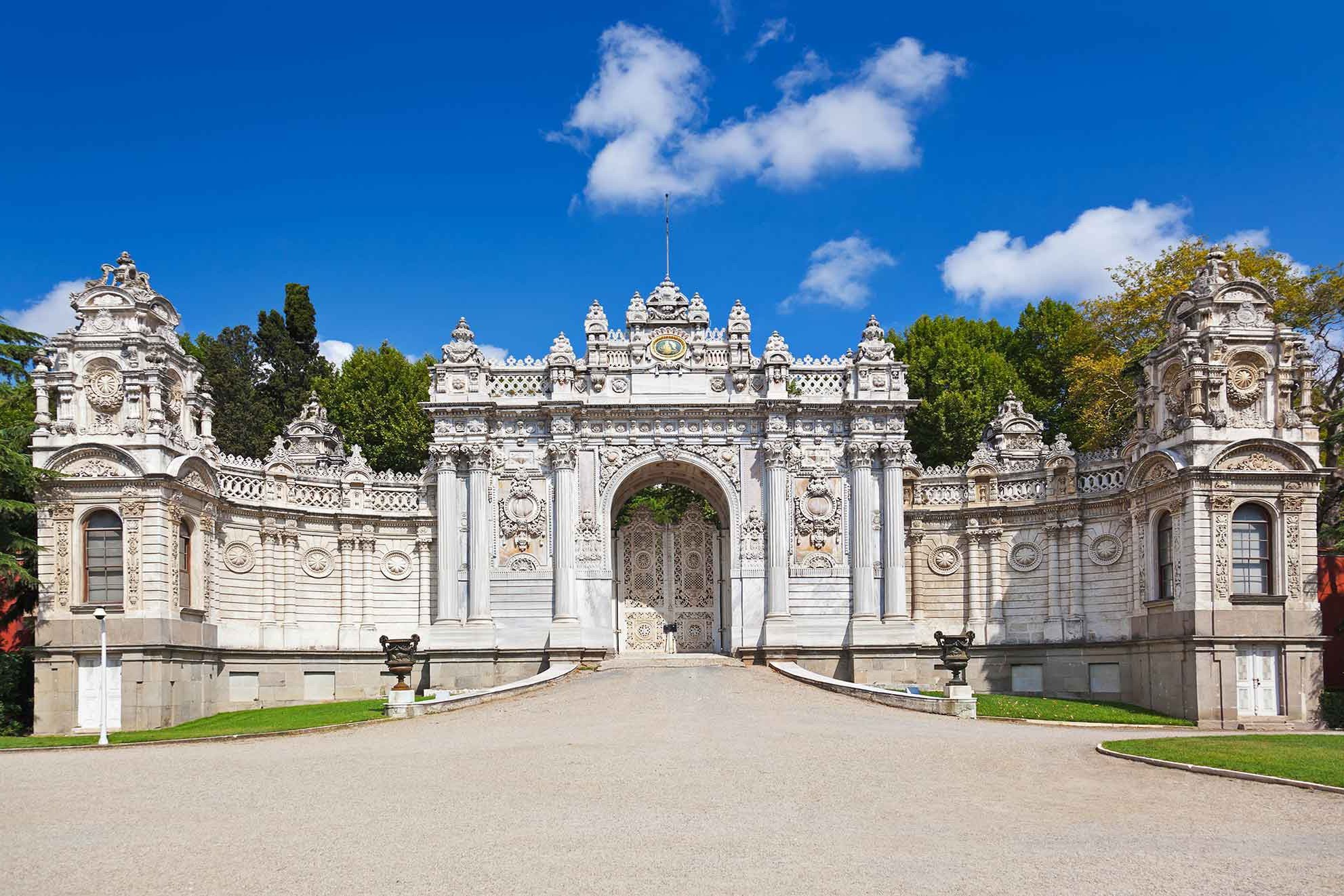
Dolmabahce witnessed some of the most dramatic decades in Ottoman history.
During the late 19th and early 20th centuries, the empire faced political upheaval, economic difficulties, constitutional struggles, wars, territorial losses, and growing international pressure.
The palace continued to serve ceremonial and dynastic functions against this rapidly changing background.
Following the First World War and the eventual collapse of the Ottoman Empire, Dolmabahce became connected with the final chapter of the dynasty.
Sultan Mehmed VI Vahdeddin, the last Ottoman sultan, departed Istanbul from the Dolmabahce area in 1922 after the abolition of the sultanate.
Abdulmecid II and the End of the Caliphate
After the abolition of the Ottoman sultanate, Abdulmecid II was selected as caliph.
He was not an Ottoman sultan, and his position represented a significantly different institution within the emerging political order.
Dolmabahce Palace became associated with this final phase of Ottoman dynastic presence in Istanbul.
In 1924, the new Turkish Republic abolished the caliphate.
Abdulmecid II and other members of the Ottoman dynasty were required to leave Turkey, bringing centuries of Ottoman dynastic residence in Istanbul to an end.
Dolmabahce Palace and the Turkish Republic
The establishment of the Republic of Turkey gave Dolmabahce Palace a new role.
The former residence of the Ottoman sultans became an important setting for state occasions, international guests, cultural events, and official activities.
Mustafa Kemal Ataturk used Dolmabahce during his stays in Istanbul.
Foreign rulers and statesmen were received here, and important cultural and academic gatherings were organized within the palace.
Dolmabahce therefore connects two major periods of Turkish history: the final century of the Ottoman Empire and the formative years of the Turkish Republic.
Mustafa Kemal Ataturk at Dolmabahce Palace
The most important Republican-era figure associated with Dolmabahce is Mustafa Kemal Ataturk, founder and first president of the Republic of Turkey.
Ataturk used the palace as a presidential residence during periods when he was in Istanbul.
Dolmabahce also hosted meetings, official receptions, and important cultural events during his presidency.
But the palace would ultimately become associated with the final days of his life.
Ataturk’s Final Days
During his final illness in 1938, Ataturk stayed at Dolmabahce Palace.
His health deteriorated during the autumn, and he died here on November 10, 1938.
The room in which he died has been preserved as one of the most emotionally significant spaces in the palace.
The clocks in the room are traditionally displayed at 9:05, the time of his death.
For many Turkish visitors, this room gives Dolmabahce an importance that extends far beyond its Ottoman imperial history.
From Imperial Residence to Museum
Following the establishment of the Republic, Dolmabahce gradually developed into a historic palace open to the public while continuing to be used on certain official occasions.
Today, the palace is preserved as one of Istanbul’s most important historic monuments.
Its rooms, furnishings, paintings, carpets, chandeliers, ceremonial spaces, gardens, and waterfront architecture provide an extraordinary record of the final century of Ottoman court life.
Rather than recreating an imperial environment from empty rooms, Dolmabahce preserves much of the atmosphere and material culture associated with the palace itself.
Dolmabahce Palace or Topkapi Palace?
Visitors sometimes wonder whether they should visit Dolmabahce Palace or Topkapi Palace.
Ideally, both should be experienced because they represent completely different periods of Ottoman history.
Topkapi reflects the world of the Ottoman Empire from the 15th century onward, with its courtyards, pavilions, Imperial Council, Treasury, Sacred Relics, and traditional Harem.
Dolmabahce represents the transformed Ottoman court of the 19th century, when European diplomatic, artistic, architectural, and cultural influences had become increasingly important.
Visiting both provides one of the clearest ways to understand how the Ottoman dynasty and its imperial culture changed over the centuries.
Visiting Dolmabahce Palace Today
Dolmabahce Palace is one of Istanbul’s major historic attractions and requires a separate entrance ticket.
Because of the size of the complex and the richness of its interiors, visitors should allow sufficient time rather than treating the palace as a brief sightseeing stop.
Access arrangements, opening hours, and individual sections available to visitors may occasionally change because of official events, restoration work, or operational requirements.
Tickets and Entrance
Entrance to Dolmabahce Palace is ticketed, and visitor demand can be considerable during busy periods.
For guests joining Eskinazi Tours & Events private tours, entrance tickets can be arranged and prepaid in advance.
This helps avoid spending valuable touring time waiting to purchase tickets on site and allows the day’s itinerary to be organized more efficiently.
Prepaid tickets do not bypass mandatory security procedures or other access controls required by the palace administration.
Security and Palace Rules
Visitors pass through security procedures before entering the palace complex.
Because Dolmabahce contains historic interiors, original furnishings, artworks, carpets, and fragile decorative elements, visitor regulations are more controlled than at many outdoor monuments.
Photography and equipment rules may differ between areas and can change according to current palace regulations.
Visitors should follow the instructions of palace staff throughout the visit.
How Much Time Should You Allow?
A visit to Dolmabahce Palace generally deserves approximately one and a half to two hours.
Visitors with a particular interest in Ottoman history, architecture, decorative arts, the Imperial Harem, or Ataturk may wish to allow longer.
The time required also depends on which sections of the palace are open and included in the visit.
Visiting Dolmabahce Palace with a Private Guide
Dolmabahce becomes considerably more meaningful when understood within the dramatic transformation of the Ottoman Empire during the 19th century.
With your own licensed private guide, the palace can be explored not simply as a collection of beautiful rooms but as a historical document.
Your guide can explain why the Ottoman dynasty moved away from Topkapi Palace, how European architectural influences entered the imperial court, how the Selamlik and Harem functioned, and how Dolmabahce became connected with the final Ottoman sultans and the early Turkish Republic.
The architecture and decoration then become part of a much larger story about an empire attempting to redefine itself in a rapidly changing world.
Combine Dolmabahce Palace with the Bosphorus
Dolmabahce Palace occupies an exceptional location directly beside the Bosphorus, making it particularly suitable for itineraries exploring Istanbul beyond the historic peninsula.
A private tour can combine the palace with a private Bosphorus cruise or with other districts and monuments along the European shore.
It can also be incorporated into a broader itinerary exploring Taksim, Istiklal Street, Galata, Besiktas, or other parts of modern and Ottoman Istanbul.
For visitors interested in Ottoman history, combining Dolmabahce with Topkapi Palace offers an especially revealing comparison between two very different periods of imperial life.
Discover Dolmabahce Palace as Part of Your Private Istanbul Tour
Step inside the extraordinary world of the late Ottoman court and discover one of the most magnificent palaces on the Bosphorus.
Explore the ceremonial halls, monumental staircases, imperial apartments, crystal chandeliers, elegant furnishings, and private spaces of the Ottoman dynasty while learning about Sultan Abdulmecid I, the final Ottoman sultans, and Mustafa Kemal Ataturk.
With Eskinazi Tours & Events, Dolmabahce Palace can be incorporated into a personalized private tour focusing on Ottoman history, architecture, the Bosphorus, or the transformation from the Ottoman Empire to modern Turkey.
Entrance tickets can be arranged and prepaid in advance, helping you avoid the on-site ticket-purchase queue and use your time in Istanbul more efficiently.