

Discover the History of Istanbul’s Ashkenazi Jewish Community
Located in the historic district of Galata, the Ashkenazi Synagogue is one of the most distinctive landmarks of Jewish heritage in Istanbul. Inaugurated in 1900, the synagogue reflects the history of Ashkenazi Jews who settled in the city from Central and Eastern Europe and established their own religious institutions alongside Istanbul’s much larger Sephardic Jewish community.
For centuries, Galata was home to a remarkably diverse population of Jews, Greeks, Armenians, Europeans, and other communities. Among its Jewish residents were Ashkenazi families with connections to Austria, Hungary, Germany, Poland, and other parts of Europe. Their traditions differed in language, customs, and religious practice from those of the Sephardic Jews who formed the majority of Istanbul’s Jewish population.
The Ashkenazi Synagogue became an important center for preserving these traditions. More than a century after its inauguration, it remains an active place of worship and an important reminder of the diversity that has long existed within Jewish life in Istanbul.
Ashkenazi Jews in Istanbul
Although Istanbul is particularly associated with the Sephardic Jews who arrived in the Ottoman Empire following their expulsion from Spain in 1492, the Jewish history of the city is considerably more diverse.
Jewish communities had lived in Constantinople for centuries before the Sephardic migrations, including Romaniote Jews whose roots in the eastern Mediterranean stretched back to the Byzantine period. Later centuries brought Jewish immigrants from many different parts of Europe and the Mediterranean.
Among them were Ashkenazi Jews from Central and Eastern Europe. Some came to the Ottoman capital for commercial opportunities, while others arrived as a result of political upheaval, persecution, or changing conditions elsewhere in Europe.
Galata became particularly important to these communities. Situated across the Golden Horn from the historic peninsula, the district had long been connected with international trade and European communities. Its cosmopolitan character made it a natural home for Jewish merchants, craftsmen, professionals, and families arriving from different parts of Europe.
The Ashkenazi Community of Galata
By the 19th century, Galata and neighboring Pera were among the most cosmopolitan districts of the Ottoman capital. European embassies, banks, trading houses, churches, synagogues, schools, shops, and residential buildings stood within a relatively small area.
Ashkenazi Jews formed a distinct part of this environment. Families originating from places such as Austria, Hungary, Germany, Poland, and other parts of Central and Eastern Europe brought their own religious customs and communal traditions to Istanbul.
This distinguished them from the city’s much larger Sephardic population, whose religious traditions and cultural heritage had developed over centuries within the Ottoman world.
The presence of different Jewish traditions within the same city is one of the most interesting aspects of Istanbul’s Jewish history. Sephardic, Ashkenazi, and Romaniote communities each contributed to the complex Jewish identity of the Ottoman capital.
The Founding of the Ashkenazi Synagogue
The present Ashkenazi Synagogue was inaugurated on September 17, 1900, during the reign of Ottoman Sultan Abdulhamid II.
Its establishment reflected the need for a substantial place of worship where Istanbul’s Ashkenazi community could maintain its own religious traditions. The synagogue became an important spiritual and communal center for Ashkenazi Jews living around Galata and the surrounding districts.
The new synagogue emerged within an area that already possessed an established Ashkenazi religious presence. Earlier places of worship had served members of the community during the 19th century, particularly Jews connected with the Austrian community in Istanbul.
The synagogue completed in 1900 provided the community with a permanent and impressive religious building that has survived into the present day.
Its location in Galata was particularly appropriate. The surrounding streets were then part of one of the city’s most internationally connected neighborhoods, where Ottoman, European, Jewish, Christian, and Muslim communities interacted through commerce and everyday life.
Architecture of the Ashkenazi Synagogue
The architecture of the Ashkenazi Synagogue immediately distinguishes it from many of Istanbul’s older Sephardic synagogues.
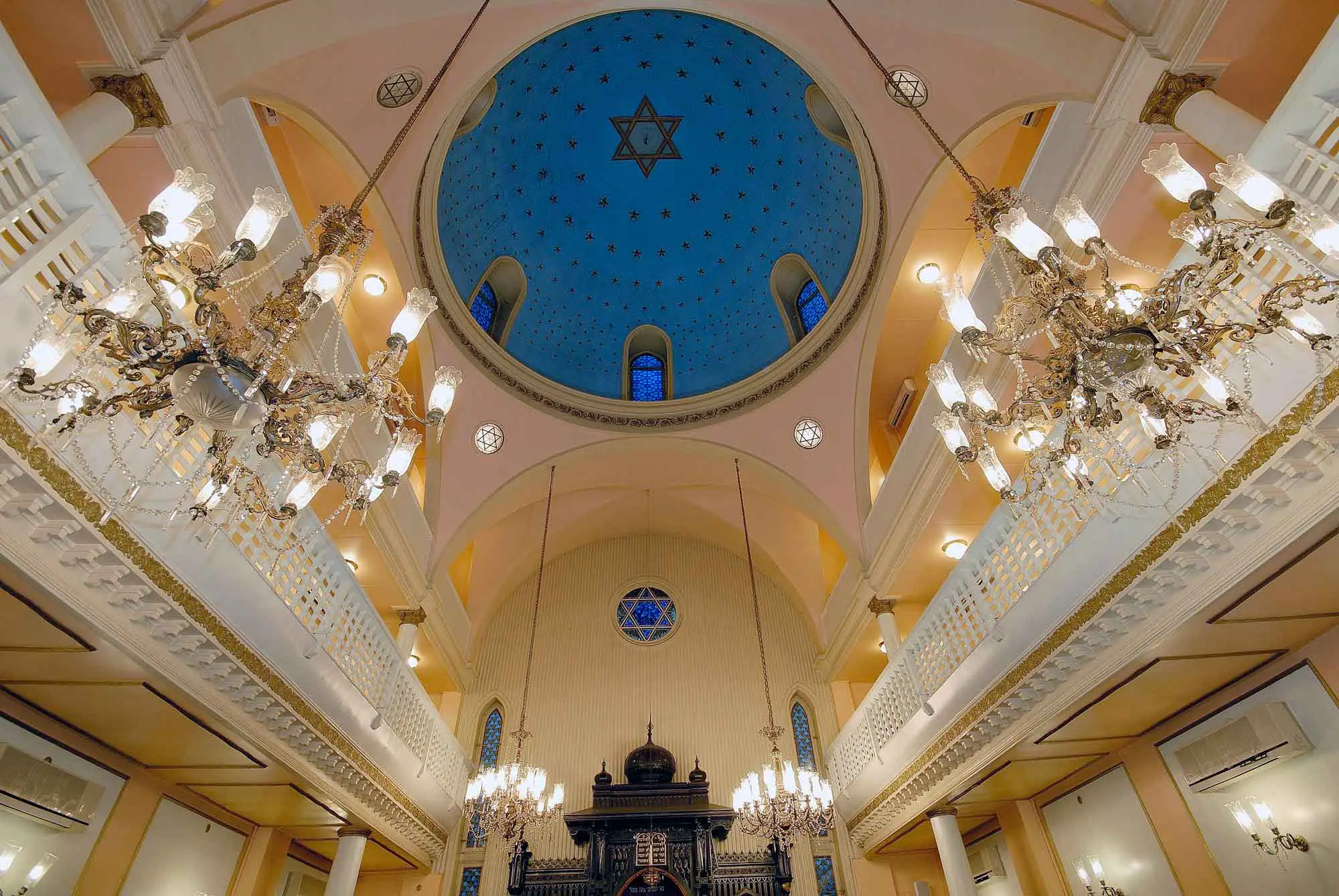
Its imposing facade and European-influenced design reflect the cultural background of the community that constructed it at the beginning of the 20th century. The building belongs to a period when the architecture of Galata and Pera was increasingly influenced by European styles, creating the distinctive urban landscape that can still be seen in the area today.
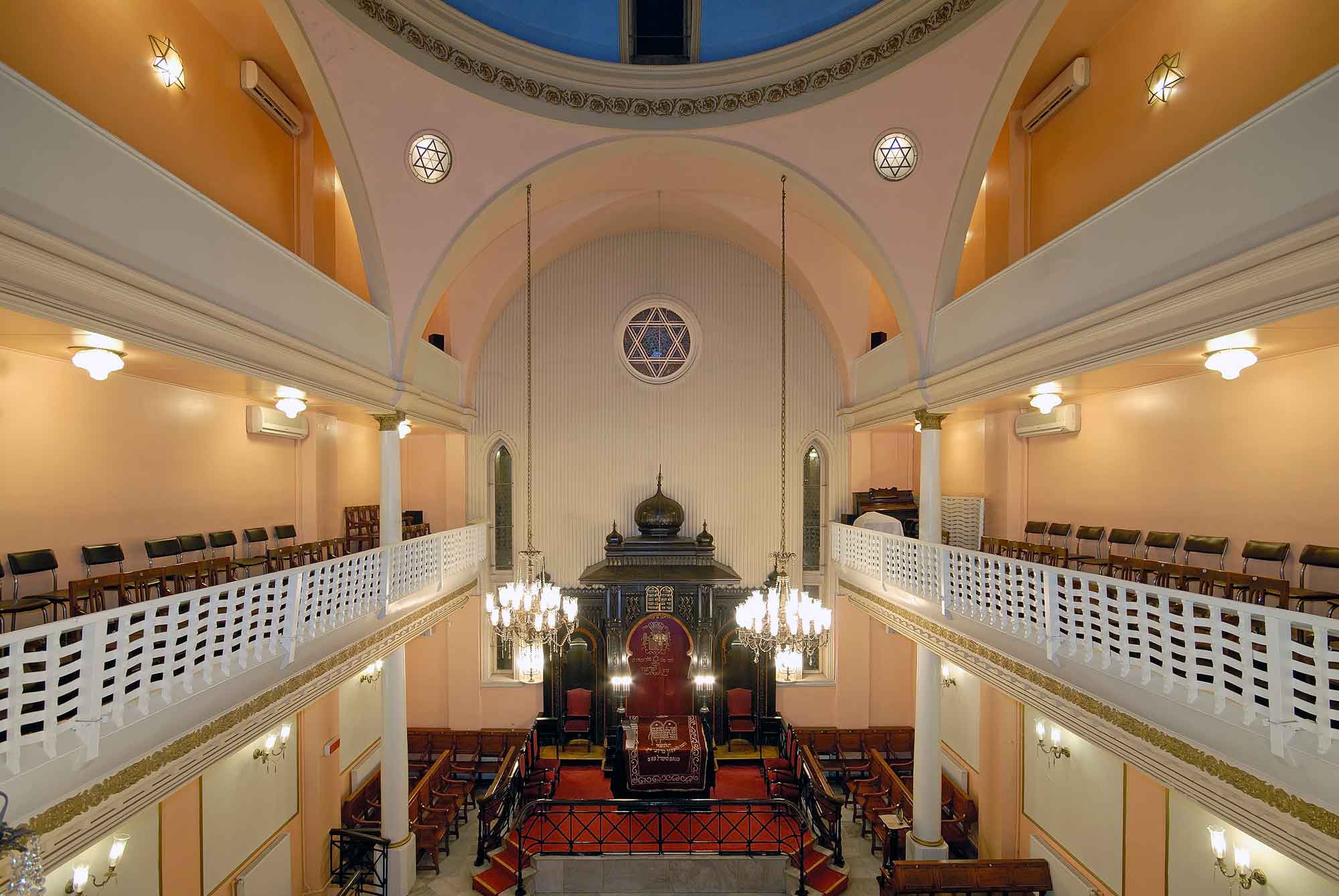
Inside, the synagogue opens into an elegant prayer hall organized around the requirements of Jewish worship.
The combination of architectural form, decorative details, galleries, religious furnishings, and ceremonial space creates an interior that is both impressive and intimate. Rather than functioning simply as a historical monument, the building was designed as a living house of worship for the community that built it.
Inside the Ashkenazi Synagogue
The interior provides an opportunity to understand both the religious traditions of the congregation and the artistic character of the building.
Among its most important elements are the bimah, from which the Torah is read during services, and the Aron Kodesh, or Holy Ark, where the Torah scrolls are kept.
These are not merely decorative features. They stand at the center of Jewish religious life and help visitors understand how the synagogue continues to function as a sacred space.
The arrangement of the prayer hall also reflects traditional Jewish worship. Galleries above the main floor form the women’s section, while the central religious furnishings organize the interior around prayer and the reading of the Torah.
Decorative elements throughout the synagogue reflect the European background of its congregation while also revealing the influence of the wider cultural environment of Istanbul.
The Bimah and Aron Kodesh
Among the most striking features of the synagogue are its bimah and Aron Kodesh.
The bimah serves as the platform from which passages of the Torah are read before the congregation. The Aron Kodesh is the sacred cabinet containing the Torah scrolls and forms one of the principal visual and religious focal points of the synagogue.
The synagogue’s historic furnishings are closely connected with the families who supported the congregation. They provide an important reminder that synagogues were shaped not only by rabbis and religious institutions but also by generations of community members whose donations helped maintain Jewish religious life in Istanbul.
Looking closely at these elements also reveals how architecture and ritual work together within a synagogue. Every major part of the interior has a practical religious purpose while simultaneously contributing to the beauty and dignity of the building.
The Women’s Galleries
The synagogue includes galleries traditionally used by female worshippers during religious services.
These galleries overlook the main prayer hall and form an important part of the architectural composition of the interior. Their arrangement reflects the traditional separation of men and women during Orthodox Jewish worship.
From an architectural perspective, the galleries also help create the synagogue’s distinctive sense of vertical space. Together with the main prayer hall and decorative elements, they contribute to an interior quite different in character from several of Istanbul’s historic Sephardic synagogues.
Ashkenazi and Sephardic Traditions in Istanbul
One of the most interesting reasons to visit the Ashkenazi Synagogue is the opportunity to explore the diversity of Jewish traditions within Istanbul.
The overwhelming majority of Ottoman Jews after the late 15th century were associated with the Sephardic tradition. Sephardic communities established numerous synagogues and preserved cultural traditions that became deeply connected with Jewish life in the Ottoman Empire.
Ashkenazi Jews followed different liturgical traditions and brought cultural influences from Central and Eastern Europe.
These differences did not mean that the communities existed entirely separately from one another. They lived within the same city, participated in its economic and social life, and gradually developed relationships within the wider Jewish community.
The Ashkenazi Synagogue nevertheless remained an important institution through which Ashkenazi religious customs and communal identity could be preserved.
This makes the synagogue particularly valuable for understanding Istanbul’s Jewish heritage. The city’s Jewish history cannot be reduced to a single migration, community, or tradition. It developed through many different groups whose histories sometimes intersected while retaining distinctive identities of their own.
Galata and Jewish Istanbul
The location of the synagogue also makes it an excellent starting point for understanding the Jewish history of Galata.
For centuries, the district played an important role in Istanbul’s commercial and multicultural life. Its proximity to the port, the Golden Horn, and international trading networks attracted merchants and communities from throughout the Mediterranean and Europe.
Jewish families lived and worked throughout this part of the city. Synagogues, businesses, residences, schools, and communal institutions became part of the urban landscape.
The Jewish heritage of Galata can therefore be understood not simply through individual monuments but through the neighborhood itself. Walking its streets reveals how closely Jewish history was connected with the broader commercial and cosmopolitan development of Istanbul.
Nearby Jewish heritage sites help place the Ashkenazi Synagogue within this larger story, demonstrating how different Jewish communities lived alongside one another in one of the most diverse districts of the Ottoman capital.
The Ashkenazi Synagogue Today
More than a century after its inauguration, the Ashkenazi Synagogue remains an active synagogue and an important part of Jewish heritage in Istanbul.
Its continued existence is particularly significant because many of the demographic and social conditions that shaped Jewish life in Galata during the late Ottoman period have changed dramatically.
The synagogue therefore serves two roles. It remains a sacred place connected with the religious life of the Jewish community while also preserving the memory of generations of Ashkenazi Jews who made Istanbul their home.
Visitors should always remember that this is not simply a historical attraction. It is a functioning place of worship, and visits are arranged according to the requirements of the congregation, religious calendar, services, and current security procedures.
Visiting the Ashkenazi Synagogue
Visits to Istanbul’s synagogues are different from visits to most museums or historical monuments.
Because the Ashkenazi Synagogue remains an active religious institution, tourist access generally requires advance arrangements and is subject to the synagogue’s schedule, religious holidays, services, and current security procedures.
Visitors may also be required to provide passport information in advance as part of the access arrangements.
Availability can change, and a synagogue that is normally accessible may occasionally be unavailable because of religious services, community events, holidays, or other circumstances.
For this reason, synagogue visits should be arranged before the day of the tour rather than treated as spontaneous sightseeing stops.
Visitors should also dress respectfully and remember that they are entering a functioning house of worship.
Discover Istanbul’s Jewish Heritage with a Private Guide
The Ashkenazi Synagogue becomes even more meaningful when explored within the wider story of Jewish Istanbul.
A private Jewish heritage tour can connect the synagogue with the historic Jewish neighborhoods of Galata, Balat, and the Bosphorus while exploring the Sephardic, Ashkenazi, and Romaniote traditions that contributed to the city’s Jewish history.
Depending on current access arrangements and the interests of our guests, visits may include additional historic synagogues and Jewish heritage sites throughout Istanbul.
At Eskinazi Tours & Events, our Jewish heritage tours are individually designed according to your interests, available time, and the synagogues accessible on the day of your visit. Our team coordinates the necessary synagogue arrangements in advance whenever possible, while your licensed private guide provides the historical and cultural context needed to understand the remarkable story of Jewish life in Istanbul.
Whether your interest is Jewish history, synagogue architecture, Sephardic and Ashkenazi traditions, Ottoman history, or your own family’s connection with Turkey, we can create a private itinerary around the aspects of Jewish Istanbul that are most meaningful to you.