

Discover One of the Oldest and Most Important Synagogues of Istanbul
Located in the historic neighborhood of Balat along the Golden Horn, the Ahrida Synagogue is one of the most important surviving monuments of Jewish heritage in Istanbul. With origins extending back more than five centuries, it preserves the memory of Jewish communities that settled in Ottoman Constantinople from the Balkans and later became part of the city’s predominantly Sephardic Jewish world.
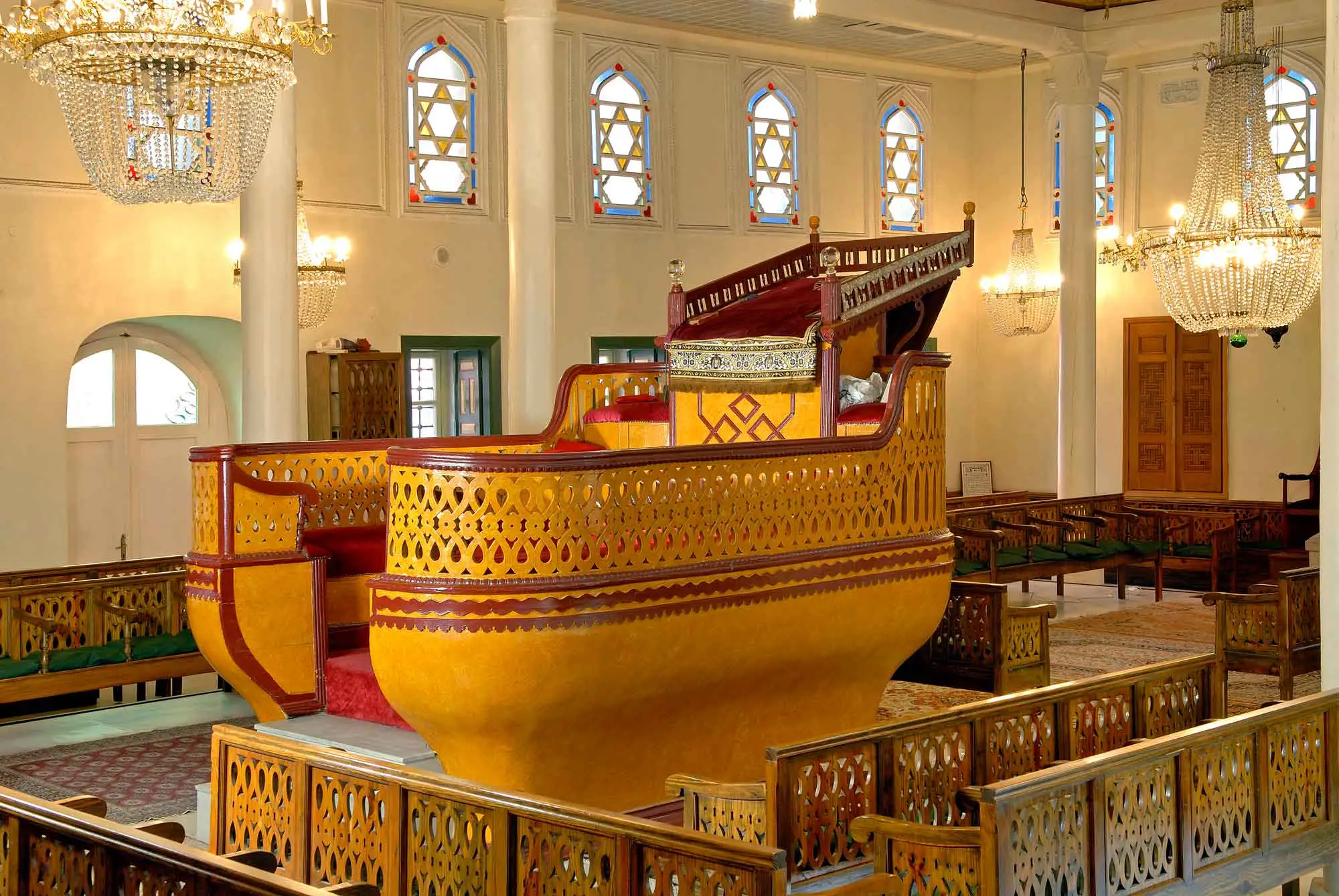
Ahrida is particularly remarkable for its unusual boat-shaped Tevah, its historic interior, and its association with some of the most fascinating episodes in Ottoman Jewish history. The synagogue is also traditionally connected with Sabbatai Zevi, the controversial 17th-century Jewish mystic and messianic claimant whose movement spread throughout Jewish communities across Europe and the Ottoman Empire.
Together with the nearby Yanbol Synagogue, Ahrida offers a rare connection with the period when Balat was one of the principal centers of Jewish life in Constantinople.
The Jewish Community of Balat
The history of Ahrida Synagogue is inseparable from the history of Balat.
Situated along the Golden Horn, Balat developed into one of the most important Jewish neighborhoods of Ottoman Constantinople. For centuries, its streets contained synagogues, Jewish schools, homes, workshops, shops, and communal institutions.
The Jewish population of the city was never a single homogeneous community. Jews living in Constantinople came from different geographic and cultural backgrounds and often organized themselves into congregations according to their places of origin and religious traditions.
Some belonged to the ancient Romaniote tradition of the Byzantine and eastern Mediterranean world. Others came from communities throughout the Balkans following the Ottoman conquest of Constantinople in 1453. From the end of the 15th century onward, large numbers of Sephardic Jews arriving from the Iberian Peninsula profoundly transformed the Jewish population of the Ottoman capital.
Ahrida Synagogue preserves traces of this complex history.
From Ohrid to Constantinople
The name Ahrida is generally associated with Ohrid, a historic city in the Balkans located in present-day North Macedonia.
Jews originating from Ohrid settled in Ottoman Constantinople and established a congregation that retained the name of their former home. In Ottoman Jewish society, this was not unusual. Congregations were frequently associated with the towns or regions from which their members had originated.
The nearby Yanbol Synagogue provides another surviving example, preserving the memory of Jews associated with Yanbol, present-day Yambol in Bulgaria.
These names offer a fascinating glimpse into the formation of Jewish Constantinople. The city’s Jewish population was assembled over centuries from communities originating throughout the Balkans, Anatolia, the Mediterranean, and later the Iberian Peninsula.
Over generations, many of these distinctions became less pronounced, particularly as Sephardic culture became increasingly dominant within Ottoman Jewish life. Yet the names of synagogues such as Ahrida and Yanbol preserved the memory of earlier migrations.
The Origins of Ahrida Synagogue
Ahrida is generally considered one of Istanbul’s oldest surviving synagogues, with its origins traditionally traced to the 15th century.
The synagogue should not, however, be imagined as a building that has remained completely unchanged since that period.
Like many historic religious buildings in Istanbul, Ahrida experienced centuries of fires, earthquakes, repairs, enlargements, and restorations. The structure seen today therefore represents several different periods in the synagogue’s long history.
This layered architectural development is part of what makes Ahrida so important. The synagogue is not simply a monument to one moment in Ottoman Jewish history; it reflects the continued presence of a congregation adapting its place of worship across generations.
Ahrida During the Ottoman Period
As Constantinople grew into the political and commercial center of the Ottoman Empire, its Jewish population expanded considerably.
The arrival of Sephardic Jews following the expulsions from Spain in 1492 and Portugal in the following years had a particularly profound influence. These newcomers brought their own religious traditions, languages, commercial networks, scholarship, and cultural practices.
Over time, Sephardic culture became dominant within much of Ottoman Jewish society, including Istanbul.
Ahrida survived within this changing environment. Although its origins are associated with Jews from Ohrid and the older Balkan Jewish world, the synagogue eventually became closely integrated into Istanbul’s wider Sephardic religious tradition.
Its history therefore provides an excellent example of how different Jewish communities gradually interacted and merged while still preserving memories of their distinct origins.
The Great Restoration of the 17th Century
One of the most important periods in the architectural history of Ahrida came during the late 17th century.
The synagogue underwent substantial rebuilding and restoration following one of the destructive fires that repeatedly affected the densely populated neighborhoods along the Golden Horn.
Later repairs and restorations continued to alter and preserve the building, allowing the synagogue to remain in use despite the enormous physical and demographic changes experienced by Balat.
The result is an interior shaped by centuries rather than a single architectural campaign.
Its historic furnishings, wooden elements, prayer spaces, and decorative features together create one of the most atmospheric synagogue interiors in Istanbul.
Architecture of Ahrida Synagogue
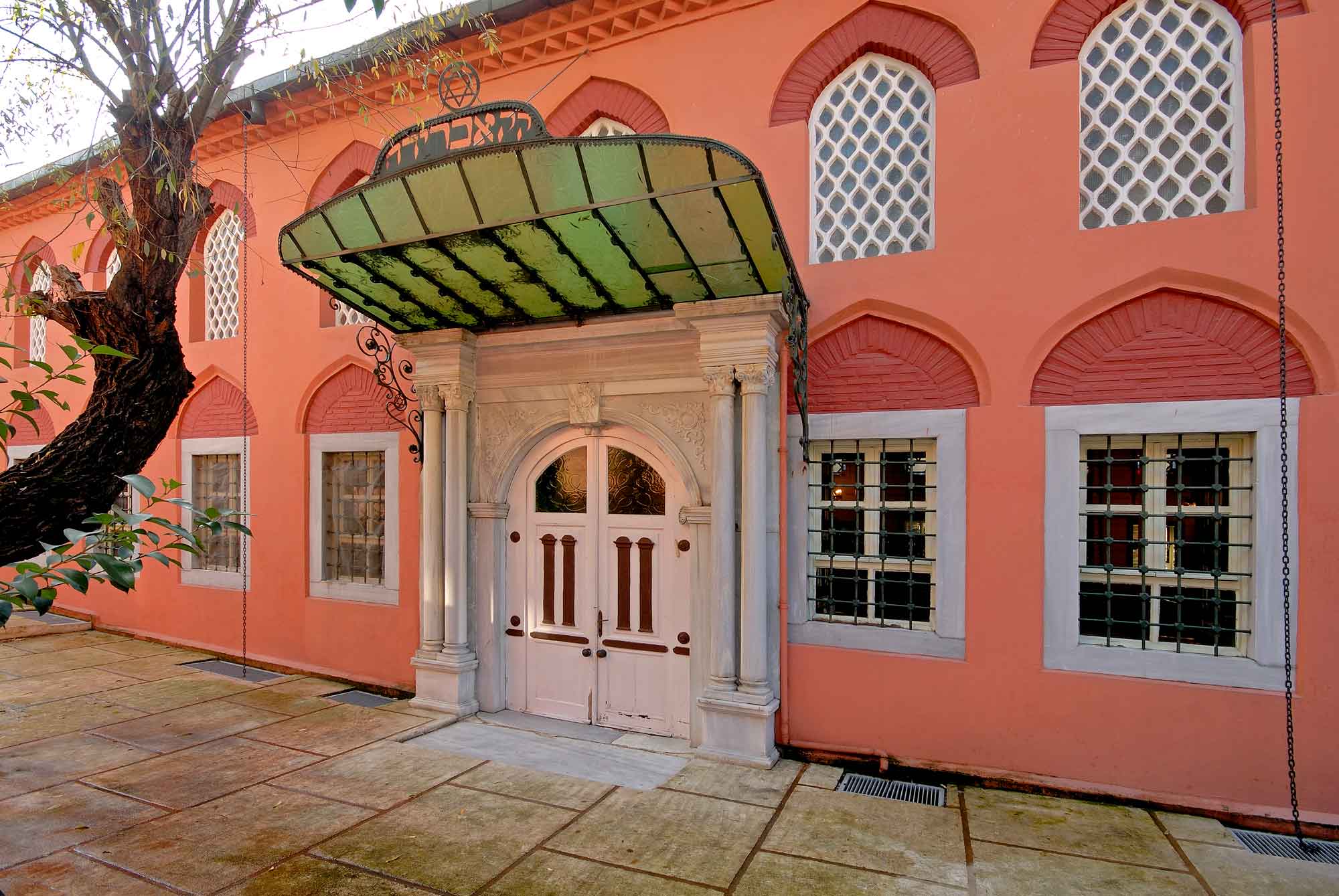
From the surrounding streets, Ahrida does not immediately reveal the importance of the space within.
This relatively discreet exterior is characteristic of many historic synagogues in the Ottoman city. Once inside the complex, however, visitors encounter a spacious and carefully organized religious interior.
The synagogue’s architecture developed around the practical requirements of Jewish worship. The Ehal HaKodesh, or Holy Ark, contains the Torah scrolls, while the Tevah provides the elevated platform from which the Torah is read.
The women’s section, or Azara, forms another important component of the synagogue.
Wood, stone, decorative plasterwork, religious furnishings, and later restoration work all contribute to an interior that reflects several periods of Ottoman Jewish history.
Yet one architectural feature attracts particular attention.
The Famous Boat-Shaped Tevah
The most recognizable feature of Ahrida Synagogue is its extraordinary boat-shaped Tevah.
The Tevah is the raised platform from which the Torah is read during religious services. At Ahrida, its distinctive form resembles the prow of a ship, making it unlike the Tevah found in most other historic synagogues in Istanbul.
Several interpretations have developed around its unusual shape.
According to one popular tradition, the Tevah symbolizes the ships that carried Sephardic Jews from the Iberian Peninsula to the Ottoman Empire following their expulsion from Spain in 1492.
Another interpretation associates its form with Noah’s Ark, giving the structure a broader biblical symbolism of survival and deliverance.
These interpretations have become closely associated with the synagogue, although the precise historical intention behind the design cannot be established with certainty.
Regardless of its original symbolism, the boat-shaped Tevah has become the defining architectural feature of Ahrida and one of the most memorable elements of Jewish heritage in Istanbul.
The Ehal HaKodesh
Another important feature of Ahrida is the Ehal HaKodesh, the Holy Ark in which the Torah scrolls are kept.
Located at the sacred focal point of the synagogue, the Ehal is both a functional element of Jewish worship and one of the principal decorative features of the interior.
Its ornamentation and craftsmanship reflect the importance placed upon the Torah within synagogue life.
Together with the boat-shaped Tevah, the Ehal defines the principal religious space of Ahrida and provides visitors with an opportunity to understand how architecture, ritual, and community life come together within a traditional synagogue.
The Women’s Section
Ahrida also contains an Azara, the traditional section reserved for female worshippers.
The women’s gallery overlooks the principal prayer space and reflects the organization of worship within an Orthodox synagogue.
Like other elements of Ahrida, the gallery has been affected by the numerous alterations and restorations carried out throughout the building’s long history.
Its presence nevertheless helps visitors understand how the synagogue functioned not merely as an architectural monument but as a communal religious space serving generations of Jewish families in Balat.
Sabbatai Zevi and Ahrida Synagogue
One of the most fascinating chapters in the history of Ahrida Synagogue is its traditional association with Sabbatai Zevi.
Born in Smyrna, present-day Izmir, in 1626, Sabbatai Zevi became one of the most controversial figures in Jewish history. During the 17th century, he proclaimed himself the long-awaited Jewish Messiah, and his movement attracted followers across the Ottoman Empire and throughout Jewish communities in Europe and the Mediterranean.
The movement reached extraordinary proportions during the 1660s. News of the supposed Messiah spread rapidly, creating intense expectations of redemption among Jewish communities separated by enormous distances.
Istanbul became one of the important centers through which the movement developed.
According to longstanding tradition, Sabbatai Zevi preached at Ahrida Synagogue during his time in Constantinople.
His connection with the synagogue adds another dimension to Ahrida’s historical importance, linking the building with one of the most dramatic religious movements in early modern Jewish history.
The Sabbatean Movement
The extraordinary rise of Sabbatai Zevi cannot be understood simply as the story of an individual claiming to be the Messiah.
Jewish communities of the 17th century had experienced persecution, displacement, political instability, and profound religious expectations. Kabbalistic teachings concerning redemption and the coming of the Messiah had also become increasingly influential.
When Sabbatai Zevi’s claims were promoted by the charismatic theologian Nathan of Gaza, enthusiasm spread rapidly.
Some followers sold possessions or prepared themselves for imminent redemption. Letters and reports traveled between Jewish communities from the Ottoman Empire to Italy, the Netherlands, Germany, Poland, and beyond.
Ottoman authorities eventually detained Sabbatai Zevi. In 1666, faced with the consequences of his messianic claims, he converted to Islam.
For many followers, his conversion was devastating. Others attempted to interpret the event through mystical explanations and continued to believe that his messianic mission had not ended.
The episode left a lasting mark on Jewish history.
Ahrida’s traditional connection with Sabbatai Zevi therefore places this relatively modest synagogue within a story that extended far beyond Istanbul.
Ahrida and the Sephardic Heritage of Istanbul
Although Ahrida’s origins are associated with Jews from the Balkans, the synagogue eventually became part of Istanbul’s predominantly Sephardic Jewish culture.
This transformation reflects the wider development of Ottoman Jewish society.
Following the arrival of Jews expelled from Spain and Portugal, Sephardic traditions became increasingly influential throughout major Ottoman Jewish centers such as Constantinople, Salonica, Edirne, and Izmir.
Ladino, also known as Judeo-Spanish, became an important language of Jewish communal life. Sephardic liturgy, music, cuisine, scholarship, and customs shaped Jewish culture for generations.
Ahrida therefore embodies more than one layer of Jewish history.
Its name remembers a Balkan community. Its long history reflects Ottoman Jewish life. Its later traditions became intertwined with Sephardic culture. And its association with Sabbatai Zevi connects it with a religious movement that once captivated Jewish communities across several continents.
Ahrida and Yanbol: The Surviving Synagogues of Old Balat
Ahrida becomes particularly meaningful when considered together with the nearby Yanbol Synagogue.
Both preserve the names of communities associated with towns in the Balkans. Both survived in a neighborhood that once contained a much larger number of Jewish places of worship.
Together they provide rare physical evidence of how Jewish congregations were organized in Ottoman Constantinople.
A visitor walking between the two synagogues is therefore moving through what was once the heart of a thriving Jewish neighborhood.
Most traces of that world are less obvious today. Many synagogues disappeared, Jewish families moved to other districts, and the character of Balat changed considerably during the 19th and 20th centuries.
Ahrida and Yanbol survived as witnesses to that earlier landscape.
The Restoration of Ahrida Synagogue
By the late 20th century, centuries of use and alteration had inevitably affected the synagogue.
An extensive restoration was undertaken in the 1990s, helping preserve Ahrida’s historic architecture and preparing the synagogue for the commemoration of the 500th anniversary of the arrival of Sephardic Jews in the Ottoman Empire.
The restoration sought to preserve the historical character of the building while ensuring that it could continue functioning as a religious and communal space.
This work helped secure the survival of one of Istanbul’s most important Jewish monuments and brought renewed attention to the extraordinary Jewish heritage of Balat.
Ahrida Synagogue Today
Today, Ahrida remains one of the most historically significant synagogues in Istanbul.
Its importance comes from the combination of its age, its Balkan origins, its later Sephardic identity, its unusual architecture, and its association with major episodes in Jewish history.
The synagogue also provides an important reminder that Istanbul’s Jewish heritage extends far beyond the arrival of Sephardic Jews from Spain.
Romaniote Jews, Balkan communities, Sephardic immigrants, Ashkenazi Jews, and other groups all contributed to the development of Jewish life in the city.
Ahrida stands at the intersection of several of these histories.
It should also be remembered that Ahrida is not simply a historical monument. It remains a Jewish religious site and should be approached with the respect appropriate to a functioning synagogue.
Visiting Ahrida Synagogue
Visits to Ahrida Synagogue require advance arrangements and are subject to the religious calendar, community activities, synagogue availability, and current security procedures.
Visitors may be required to provide passport information in advance as part of the access arrangements.
Availability can change, particularly during Jewish holidays, religious services, private ceremonies, and community events. For this reason, a visit should be organized in advance rather than treated as a spontaneous sightseeing stop.
Visitors should dress respectfully and remember that they are entering a functioning place of worship.
Discover Jewish Balat with a Private Guide
Ahrida Synagogue is best understood within the wider history of Jewish Balat and Jewish Istanbul.
The nearby Yanbol Synagogue provides another important connection with the Balkan Jewish communities that settled in Ottoman Constantinople, while the streets of Balat preserve the memory of a neighborhood once filled with Jewish homes, businesses, schools, synagogues, and communal institutions.
A private Jewish heritage tour can place Ahrida within the much broader story of Jewish life in Constantinople and Istanbul — from the Romaniote communities of the Byzantine world and migrations from the Balkans to the arrival of Sephardic Jews and the development of Jewish life under the Ottoman Empire.
At Eskinazi Tours & Events, our Jewish heritage tours are individually designed according to your interests, available time, and the synagogues accessible on the day of your visit. Our team coordinates the necessary synagogue arrangements in advance whenever possible, while your licensed private guide provides the historical and cultural context needed to understand the remarkable Jewish heritage of Balat and Istanbul.
Whether your interests are Jewish history, Sephardic heritage, synagogue architecture, Ottoman history, Sabbatai Zevi, or your own family’s connection with Turkey, we can create a private itinerary around the aspects of Jewish Istanbul that are most meaningful to you.