

Discover the Historic “Tree of Life” Synagogue of Ortakoy
Located in the historic neighborhood of Ortakoy on the European shore of the Bosphorus, Etz Ahayim Synagogue is one of Istanbul’s most important surviving Jewish religious institutions.
Its Hebrew name, Etz Ahayim, means “Tree of Life,” a name traditionally used by a number of Jewish congregations throughout the Byzantine and Ottoman worlds.
The history of the synagogue stretches back centuries and is closely connected with the development of the Jewish community of Ortakoy. The building survived repeated fires, reconstruction, demographic changes, and the gradual transformation of the neighborhood from a Bosphorus village into one of the best-known districts of modern Istanbul.
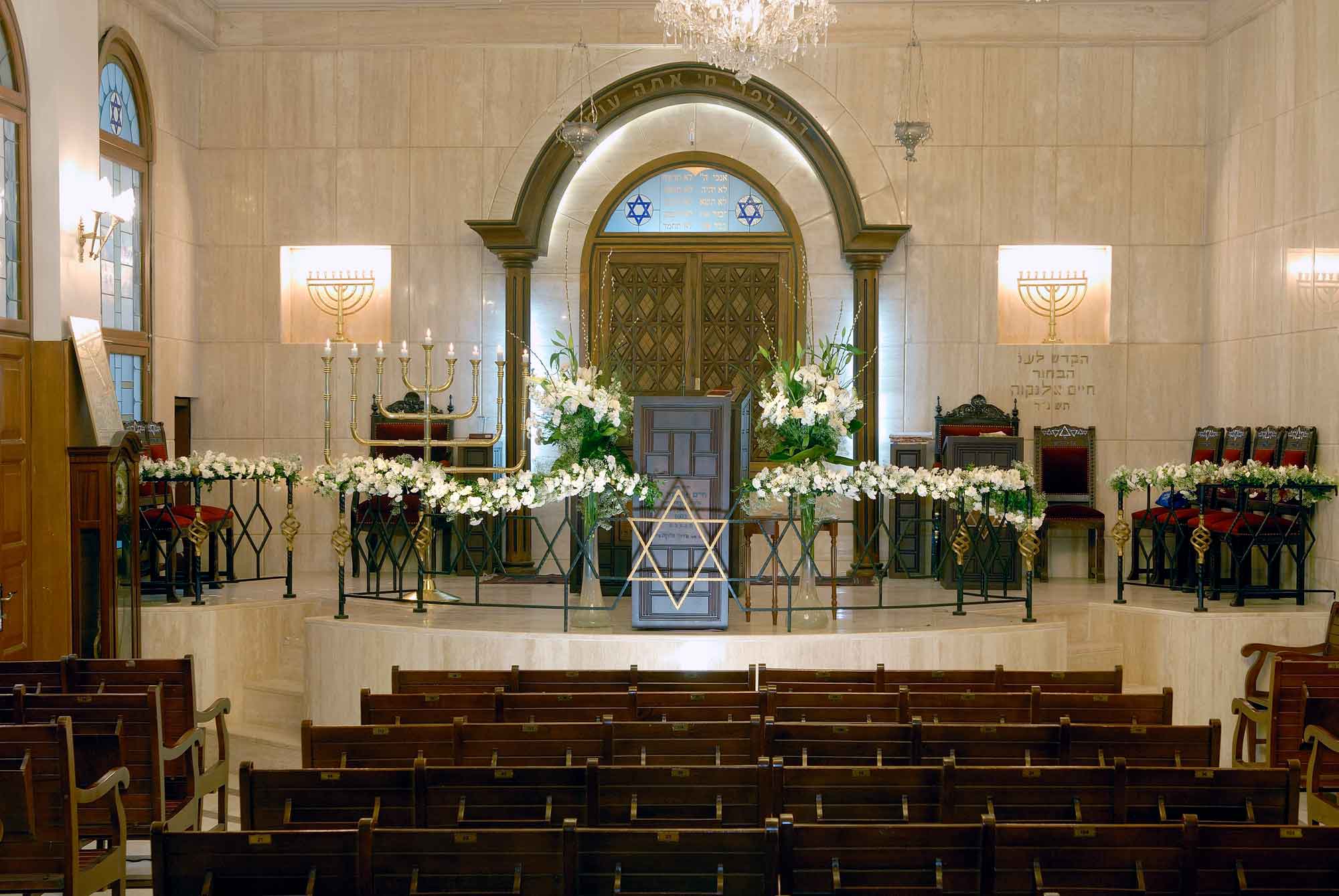
One of the most remarkable chapters in its history occurred in 1941, when a devastating fire destroyed almost the entire synagogue. The historic Ehal HaKodesh, commissioned by the prominent Camondo family in 1825, survived the disaster and preserves a physical connection with the synagogue that existed before the fire.
Today, Etz Ahayim remains an active synagogue and an important symbol of the long Jewish presence along the Bosphorus.
Jewish Life in Ortakoy
Long before Ortakoy became famous for its waterfront square and Bosphorus views, it was one of Istanbul’s most diverse neighborhoods.
Muslims, Jews, Greek Orthodox Christians, Armenians, and other communities lived within a relatively small area along the European shore of the Bosphorus.
The religious monuments that survive in the neighborhood still reflect this multicultural history. The Buyuk Mecidiye Mosque, commonly known as Ortakoy Mosque, stands prominently beside the Bosphorus, while the Church of St. Fokas represents the historic Greek Orthodox community. Etz Ahayim Synagogue preserves the memory and continuing presence of the neighborhood’s Jewish population.
Jewish settlement in the area has deep roots, although the precise history of the earliest community is difficult to reconstruct.
The Jewish population of Ortakoy increased significantly during the Ottoman period, particularly as families moved to the neighborhood following destructive fires elsewhere in Istanbul during the 17th and 18th centuries.
Over time, Ortakoy developed into an important center of Jewish residential, religious, commercial, and intellectual life.
The Origins of Etz Ahayim Synagogue
The exact foundation date of the earliest Etz Ahayim Synagogue cannot be established with certainty.
Historical documentation demonstrates that a synagogue existed in Ortakoy by the beginning of the 18th century, while traditions concerning Jewish religious life in the neighborhood extend further into the past.
This uncertainty is important when discussing historic synagogues in Istanbul.
Religious buildings were frequently damaged by fire or earthquake and subsequently rebuilt on or near earlier structures. Ottoman regulations governing the repair of non-Muslim places of worship also meant that surviving documents frequently record permission for repairs rather than the original construction of a building.
Etz Ahayim developed through precisely this type of layered history.
Rather than representing a single building preserved unchanged for centuries, the synagogue we know today is the result of generations of destruction, rebuilding, restoration, and continued religious use.
Fires and Reconstruction
Fire was one of the greatest threats to old Istanbul.
Large sections of the Ottoman city were constructed primarily from wood, and fires could spread rapidly through densely populated neighborhoods.
Etz Ahayim suffered serious damage in fires during the 18th and early 19th centuries and subsequently required major repairs.
One of the most important restorations took place in 1825 during the reign of Sultan Mahmud II.
Before the work could proceed, Ottoman authorities inspected the synagogue and granted permission for its repair. As was common under Ottoman regulations concerning existing non-Muslim religious buildings, reconstruction was subject to restrictions concerning the dimensions of the structure.
Much of the financial support for the restoration came from one of the most important Jewish families in Ottoman history: the Camondo family.
The Camondo Family and Etz Ahayim
The Camondos became one of the most prominent Jewish banking and philanthropic families of 19th-century Istanbul.
Originally associated with the Sephardic Jewish community, the family rose to considerable economic prominence and played an influential role in finance, education, philanthropy, and Jewish communal life.
Their legacy can still be encountered in several parts of Istanbul, particularly in Galata, where the famous Camondo Steps remain one of the most visible reminders of the family.
The Camondos also contributed financially to Jewish religious and educational institutions.
In 1825, the family played an important role in financing the restoration of Etz Ahayim Synagogue.
The synagogue’s historic Ehal HaKodesh, or Holy Ark, is closely connected with this restoration and carries an inscription honoring Abraham Camondo.
Remarkably, this sacred architectural element would survive a catastrophe more than a century later.
The Great Fire of 1941
One of the most dramatic events in the history of Etz Ahayim occurred on the night of October 1, 1941, during Yom Kippur.
A fire began in a section of the synagogue complex traditionally associated with the preparation of the deceased for burial and which was reportedly also being used for storage.
The fire spread through the building and devastated the historic synagogue.
Almost the entire structure was destroyed.
The Ehal HaKodesh dating from the 1825 restoration survived, becoming one of the most important surviving links with the earlier synagogue.
For the congregation, the destruction occurred at a particularly meaningful moment. Yom Kippur, the Day of Atonement, is the most solemn day of the Jewish religious calendar.
Despite the scale of the disaster, Jewish religious life at Etz Ahayim did not disappear.
The community rebuilt.
Rebuilding Etz Ahayim
Following the destruction of the historic synagogue, the congregation had to adapt the surviving religious complex for continued worship.
Before the fire, the courtyard contained several Midrashim — smaller prayer and study halls that complemented the principal synagogue.
Two of these spaces, Midrash Haverim and Midrash Tehilim, were eventually combined to form the basis of the present synagogue.
The interior was reconstructed during the 1940s, allowing religious life to continue despite the loss of the earlier building.
The present synagogue therefore occupies a fascinating position in the history of the site.
It is both a modern reconstruction and the continuation of a much older religious institution.
Historic elements surviving from the earlier complex exist alongside spaces adapted and rebuilt after the 1941 fire.
The Ehal HaKodesh
Among the most historically important elements associated with Etz Ahayim is its Ehal HaKodesh.
The Ehal, also known as the Aron Kodesh or Holy Ark, is the sacred cabinet in which the Torah scrolls are kept.
The historic Ehal was commissioned during the important restoration of 1825 and is associated with the patronage of the Camondo family.
Its survival during the catastrophic fire of 1941 gave it even greater significance.
While much of the synagogue surrounding it was destroyed, this sacred element remained as a physical connection with generations of worshippers who had prayed at Etz Ahayim before the fire.
The surviving Ehal therefore represents more than an architectural feature.
It embodies the continuity of a congregation whose place of worship repeatedly faced destruction but was repeatedly restored.
The Midrashim of Etz Ahayim
Etz Ahayim was historically more than a single prayer hall.
Its complex contained several Midrashim, smaller spaces used for prayer, study, and communal religious activities.
Before the 1941 fire, three such spaces were associated with the synagogue complex.
Two of them — Midrash Haverim and Midrash Tehilim — became particularly important after the destruction of the principal synagogue because they formed the basis of the reconstructed place of worship.
The existence of these smaller prayer spaces provides an interesting insight into traditional Jewish communal life in Istanbul.
Large synagogues served important communal occasions, while smaller Midrashim could accommodate daily prayers, religious study, particular groups, or smaller congregations.
The synagogue complex therefore functioned as a center of religious life extending beyond the main sanctuary.

Rabbi Naftali Ha-Kohen Katz
Another fascinating element of Etz Ahayim’s history is its connection with Rabbi Naftali ben Isaac Ha-Kohen Katz, an important rabbinical and Kabbalistic scholar of the late 17th and early 18th centuries.
Rabbi Naftali Katz was born in 1649 and became known as a respected scholar and Kabbalist in Central and Eastern Europe.
During the final years of his life, he set out for the Land of Israel.
His journey brought him to Istanbul, where he became associated with the Jewish community of Ortakoy. He died in the city in 1718 before completing his journey to Jerusalem.
His memory became connected with Etz Ahayim, and a Midrash within the synagogue complex bears his name.
A commemorative plaque dedicated to Rabbi Naftali ben Isaac Ha-Kohen Katz can still be found at the entrance of Midrash Naftali.
His association with Ortakoy provides another example of Istanbul’s position within the wider Jewish world.
For centuries, rabbis, merchants, scholars, pilgrims, and travelers passed through the Ottoman capital while moving between Europe, the Balkans, Anatolia, and the Holy Land.
Jewish Printing in Ortakoy
The Jewish history of Ortakoy was not limited to religious worship.
During the Ottoman period, the neighborhood also became associated with Jewish printing and intellectual life.
Hebrew printing had been introduced into the Ottoman Empire by Sephardic Jews soon after their arrival from the Iberian Peninsula at the end of the 15th century.
Istanbul subsequently became an important center for the production of Hebrew books.
By the 18th century, Ortakoy played a role in this tradition, with Jewish printing presses producing religious and scholarly works in the neighborhood.
The presence of synagogues, Midrashim, scholars, schools, printers, merchants, and communal institutions demonstrates the vitality of Jewish life in the district.
Etz Ahayim belonged to this broader religious and intellectual environment.
Sephardic Jewish Life Along the Bosphorus
The history of Etz Ahayim is closely associated with Istanbul’s Sephardic Jewish community.
Following the expulsions from Spain in 1492 and Portugal in the following years, large numbers of Sephardic Jews settled throughout the Ottoman Empire.
Over generations, their descendants became deeply integrated into the commercial, intellectual, and cultural life of cities such as Istanbul, Izmir, Edirne, and Salonica.
In Istanbul, Jewish families gradually spread across different neighborhoods.
Balat and Haskoy were major centers of Jewish life along the Golden Horn, while Galata became increasingly important during the 19th and 20th centuries.
Along the Bosphorus, communities developed in districts such as Ortakoy and Kuzguncuk.
Etz Ahayim became one of the principal religious institutions serving this Bosphorus Jewish population.
Ortakoy’s Multicultural Heritage
Few neighborhoods illustrate the religious diversity of Ottoman Istanbul as visibly as Ortakoy.
Within a relatively small area stand important monuments associated with Judaism, Islam, Greek Orthodoxy, and Armenian Christianity.
This diversity was not unique to Ortakoy, but the survival of these religious institutions makes the neighborhood particularly valuable for understanding the multicultural character of the Ottoman capital.
Etz Ahayim Synagogue is an essential part of this landscape.
Its presence reminds visitors that the famous Ortakoy waterfront was not simply an imperial or recreational district. It was also a neighborhood where Jewish families lived, worshipped, worked, studied, and participated in the everyday life of Istanbul for generations.
The Renovation of the Synagogue
By the late 20th century, demographic changes were once again affecting Jewish life in Ortakoy and the surrounding districts.
During the early 1990s, the synagogue underwent a major renovation and enlargement as Jewish families increasingly settled in nearby neighborhoods such as Ulus, Etiler, and Akatlar.
The renovated Etz Ahayim Synagogue was formally reopened for worship on March 20, 1994 with the afternoon Minha prayer.
This restoration marked another chapter in the synagogue’s long cycle of renewal.
From fires in the Ottoman period to the destruction of 1941 and the renovation of the 1990s, Etz Ahayim has repeatedly been adapted to meet the needs of changing generations.
Etz Ahayim Synagogue Today
Today, Etz Ahayim remains an active synagogue and an important institution within Istanbul’s Jewish community.
Religious services, festivals, weddings, funerals, and other community ceremonies continue to take place within the synagogue.
Its continuing religious function distinguishes Etz Ahayim from a monument preserved only for its historical importance.
The building remains part of a living tradition.
At the same time, its history offers an extraordinary window into several centuries of Jewish Istanbul — from Ottoman regulations concerning synagogues and the philanthropy of the Camondo family to Jewish scholarship, neighborhood life, catastrophic fires, reconstruction, and the changing geography of Istanbul’s Jewish population.
Visiting Etz Ahayim Synagogue
Because Etz Ahayim remains an active Jewish religious institution, visits require advance arrangements.
Access is subject to synagogue availability, religious services, Jewish holidays, community ceremonies, and current security procedures.
Visitors may be required to provide passport information in advance as part of the necessary access arrangements.
Availability can change, and visits cannot always be guaranteed. For this reason, Etz Ahayim should not be treated as a spontaneous sightseeing stop.
Visitors should dress respectfully and remember that they are entering a functioning house of worship.
Discover Jewish Istanbul Along the Bosphorus
Etz Ahayim Synagogue becomes particularly meaningful when explored within the wider history of Jewish Istanbul.
Its location in Ortakoy provides an opportunity to understand how Jewish residential life gradually expanded beyond the older neighborhoods of Balat and Haskoy and developed along the Bosphorus.
A Jewish heritage itinerary can also connect Ortakoy with Beth Yaakov Synagogue in Kuzguncuk on the Asian shore, the historic synagogues of Balat, and the Jewish heritage of Galata.
Together, these neighborhoods reveal how Istanbul’s Jewish population moved and changed over several centuries while maintaining religious institutions and communal traditions across different parts of the city.
At Eskinazi Tours & Events, our Jewish heritage tours are individually designed according to your interests, available time, and the synagogues accessible on the day of your visit. Our team coordinates the necessary synagogue arrangements in advance whenever possible, while your licensed private guide provides the historical and cultural context needed to understand the remarkable story of Jewish life in Istanbul.
Whether your interests are Sephardic history, Jewish religious traditions, synagogue architecture, the Camondo family, Ottoman history, or your own family’s connection with Turkey, we can create a private itinerary around the aspects of Jewish Istanbul that are most meaningful to you.