

Discover the Final Imperial Palace of the Ottoman Sultans
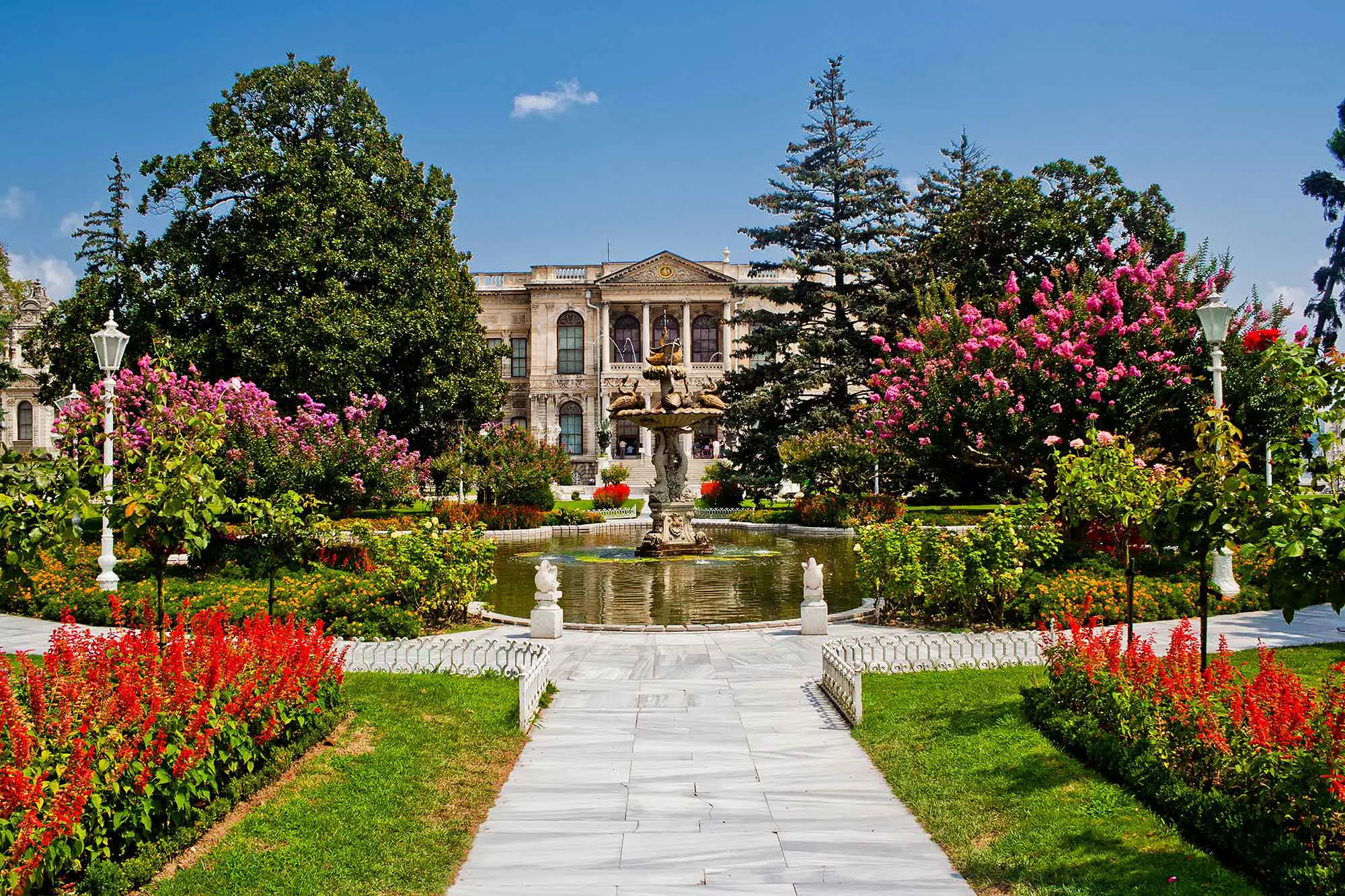
Stretching along the European shore of the Bosphorus, Dolmabahce Palace presents a very different image of the Ottoman Empire from the courtyards, pavilions, and traditional architecture of Topkapi Palace.
Built during the reign of Sultan Abdulmecid I in the 19th century, Dolmabahce became the principal administrative residence of the Ottoman sultans during a period of profound political, cultural, and social transformation.
Its architecture combines Ottoman palace traditions with Baroque, Rococo, Neoclassical, and other European influences. Behind its monumental waterfront facade are ceremonial halls, crystal chandeliers, grand staircases, reception rooms, private apartments, and the Imperial Harem.
Dolmabahce is also closely connected with the final decades of the Ottoman Empire and the early years of the Turkish Republic. Mustafa Kemal Ataturk used the palace during his stays in Istanbul and died here on November 10, 1938.
Today, Dolmabahce Palace offers one of the most fascinating opportunities to explore the transformation of the Ottoman court during the final century of the empire.
What Does Dolmabahce Mean?
The name Dolmabahce literally means “filled garden.”
The name reflects the history of the site itself.
Before the construction of the palace, part of this section of the Bosphorus shoreline was a bay traditionally associated with Ottoman naval activities.
Over time, sections of the bay were filled and transformed into imperial gardens. Palaces, mansions, and pavilions were subsequently constructed along this increasingly important waterfront area.
The landscape eventually became known as Dolmabahce — the filled garden.
From Topkapi Palace to the Bosphorus
For centuries, Topkapi Palace had been the principal residence and administrative center of the Ottoman dynasty.
By the 18th and early 19th centuries, however, members of the imperial family increasingly favored residences along the Bosphorus.
Ottoman architecture was also changing.
European artistic and architectural influences became increasingly visible in imperial buildings, fountains, mansions, palaces, and decorative arts.
During the reigns preceding Abdulmecid I, members of the dynasty spent increasing amounts of time in waterfront palaces and pavilions rather than remaining exclusively within the traditional environment of Topkapi Palace.
Dolmabahce Palace represented the culmination of this transformation.
Sultan Abdulmecid I and the New Imperial Palace
Sultan Abdulmecid I ruled the Ottoman Empire from 1839 to 1861.
His reign coincided with the Tanzimat period, an era of major administrative, legal, military, educational, and social reforms intended to modernize the Ottoman state.
The new palace reflected this changing imperial environment.
Rather than constructing another palace based primarily on the architectural traditions of Topkapi, Abdulmecid commissioned a monumental waterfront residence incorporating contemporary European architectural and decorative influences.
Dolmabahce would become both an imperial residence and an important setting for the administration and representation of the Ottoman state.
When Was Dolmabahce Palace Built?
Construction of the present Dolmabahce Palace began during the 1840s and was substantially completed by the mid-1850s.
The palace is principally associated with members of the Balyan family, the celebrated Armenian Ottoman family of imperial architects responsible for numerous important buildings in 19th-century Istanbul.
The scale of the project was extraordinary.
The palace extended along one of the most prominent sections of the Bosphorus and required enormous quantities of stone, marble, timber, decorative materials, furnishings, textiles, crystal, and artwork.
When completed, Dolmabahce became one of the most impressive royal residences of 19th-century Europe and the Ottoman world.
The Balyan Family and Ottoman Imperial Architecture
The Balyan family played an important role in shaping the architectural appearance of 19th-century Ottoman Istanbul.
Several generations served the imperial court and contributed to palaces, mosques, government buildings, and other major projects.
Their architecture reflects the increasingly cosmopolitan character of the late Ottoman capital.
At Dolmabahce, European architectural vocabulary was combined with the requirements and traditions of the Ottoman court.
The result was not simply a European palace transplanted to Istanbul.
It was an Ottoman imperial residence created during a period when the empire was consciously redefining how it presented itself to both its own population and the wider world.
Architecture Between East and West
Dolmabahce Palace is particularly fascinating because it combines different architectural traditions.
Its exterior and interior decoration display strong Baroque, Rococo, and Neoclassical influences, while the organization and function of the palace continue important aspects of Ottoman court tradition.
European-style ceremonial halls and reception rooms coexist with the traditional distinction between the official sections of the palace and the private world of the imperial family.
This combination makes Dolmabahce one of Istanbul’s clearest architectural expressions of the cultural transformation of the late Ottoman Empire.
The Palace on the Bosphorus
The location of Dolmabahce is essential to its character.
Unlike Topkapi Palace, which occupies a commanding position above the Bosphorus and Golden Horn, Dolmabahce extends directly along the waterfront.
Its long facade creates a spectacular architectural composition when viewed from the Bosphorus.
The palace was therefore designed to make an impression not only upon people approaching by land but also upon ambassadors, dignitaries, and visitors arriving from the water.
The Bosphorus became part of the architectural setting itself.
Selamlik: The Official Palace
An important part of Dolmabahce was the Selamlik, the official and ceremonial section associated with the sultan’s public duties.
Here, state affairs could be conducted and foreign ambassadors and important visitors received.
The architecture of these rooms reflects the ceremonial requirements of the imperial court.
Grand staircases, reception halls, elaborate ceilings, European furniture, paintings, carpets, crystal, and gilded decoration created an environment intended to communicate the prestige of the Ottoman dynasty.
The Medhal Hall
Visitors entering the official section of Dolmabahce encounter the Medhal Hall, or Entrance Hall.
This was an important transitional space between the entrance of the palace and its increasingly elaborate ceremonial rooms.
The hall immediately establishes the character of Dolmabahce.
Unlike the sequence of open courtyards encountered at Topkapi Palace, Dolmabahce introduces visitors to a 19th-century world of monumental interiors, European-inspired decoration, elaborate furnishings, and formal reception spaces.
The Crystal Staircase
One of the most famous architectural features of Dolmabahce Palace is the magnificent Crystal Staircase.
Its sweeping double staircase, crystal balustrades, decorative details, and dramatic spatial arrangement make it one of the palace’s most recognizable interiors.
The staircase demonstrates how architecture at Dolmabahce was designed to create a sense of ceremony.
Movement through the palace itself became part of the imperial experience.
Visitors were not simply entering a series of rooms. They were being led through increasingly impressive spaces designed to communicate elegance, wealth, and imperial authority.
The Ceremonial Hall
The architectural climax of Dolmabahce Palace is the enormous Ceremonial Hall, also known as the Muayede Hall.
This vast domed space was used for some of the most important ceremonies of the Ottoman court.
Its scale is extraordinary.
The hall rises dramatically beneath an enormous dome and creates an interior unlike almost anything else in Istanbul’s Ottoman palaces.
Ceremonial gatherings held here were carefully organized expressions of imperial hierarchy and authority.
The hall remains one of the most impressive spaces within Dolmabahce Palace.
The Great Crystal Chandelier
Suspended from the center of the Ceremonial Hall is the palace’s famous monumental crystal chandelier.
Weighing several tons and containing hundreds of lamps, it is among the most spectacular decorative objects in Dolmabahce.
The chandelier is traditionally associated with British manufacture and has become one of the defining visual symbols of the palace.
Its immense scale is particularly striking when seen beneath the great dome of the Ceremonial Hall.
Together, the chandelier, dome, columns, carpets, and decorative surfaces create the dramatic setting intended for the most important imperial ceremonies.
Hereke Carpets
The floors of Dolmabahce contain remarkable examples of Ottoman carpet production, particularly carpets associated with Hereke.
The imperial workshops at Hereke became famous during the 19th century for producing exceptionally fine carpets, textiles, and fabrics for the Ottoman court.
Large carpets were created specifically for palace interiors.
These textiles formed an important part of the visual character of Dolmabahce, complementing the European furniture, crystal chandeliers, gilded decoration, and elaborate ceilings.

Paintings and the Ottoman Court
Dolmabahce Palace also contains an important collection of paintings reflecting the increasingly international artistic environment of the late Ottoman court.
European artists worked for and visited the Ottoman palace, while Ottoman artists increasingly engaged with European painting techniques.
Among the artists associated with the wider palace collections is the Russian painter Ivan Aivazovsky, celebrated particularly for his dramatic maritime paintings.
The presence of such works reflects the cosmopolitan cultural environment of 19th-century Istanbul and the close relationship between the Ottoman court and European artistic traditions.
The Imperial Harem
Despite its European architectural appearance, Dolmabahce retained the traditional Ottoman division between the official palace and the private residence of the imperial family.
The Imperial Harem formed the private world of the dynasty.
The word “Harem” is frequently misunderstood. Rather than simply describing a collection of women, it referred to the protected private residential section of the imperial household.
Here lived members of the sultan’s family, including his mother, consorts, children, princes, princesses, attendants, and other members of the palace household.
Exploring the Harem provides a very different perspective from the monumental ceremonial halls of the Selamlik.
Life Inside the Dolmabahce Harem
The Harem contained bedrooms, reception rooms, salons, corridors, apartments, and spaces used by members of the imperial family.
Its interiors demonstrate how the private life of the Ottoman dynasty had changed considerably since the earlier centuries of Topkapi Palace.
European-style furniture, chandeliers, curtains, carpets, and decorative elements appear throughout the residential spaces.
Yet the social organization of the imperial household continued to reflect Ottoman dynastic traditions.
The Harem therefore provides an important bridge between the older Ottoman court and the increasingly European-influenced lifestyle of the 19th-century dynasty.
The Valide Sultan
As in earlier Ottoman palaces, the Valide Sultan — the mother of the reigning sultan — occupied an important position within the imperial household.
The role was not merely domestic.
The mother of the sultan could possess considerable prestige and influence within the dynasty and maintained her own household within the palace.
Her apartments formed an important part of the Harem.
Understanding the role of the Valide Sultan helps visitors appreciate that the Harem was a highly structured dynastic institution rather than the romanticized environment often imagined in Western popular culture.
Dolmabahce and the Cost of Imperial Splendor
The construction and decoration of Dolmabahce required enormous financial resources.
The palace was built during a period when the Ottoman government was attempting extensive reforms while also facing increasing economic pressures.
Its extraordinary expense has therefore become part of the historical discussion surrounding the palace.
Dolmabahce’s lavish interiors demonstrate the wealth and prestige the Ottoman dynasty wished to project, but they also belong to a century characterized by growing financial difficulties and increasing reliance on foreign borrowing.
For this reason, the palace can be understood both as a masterpiece of imperial architecture and as a monument to the complicated political and economic circumstances of the late Ottoman Empire.
The Ottoman Sultans at Dolmabahce
Dolmabahce became an important residence for several Ottoman sultans, although not every ruler preferred to live here continuously.
Sultan Abdulmecid I was the first sultan to occupy the new palace.
His successor, Sultan Abdulaziz, also used Dolmabahce, while later members of the dynasty divided their time among different imperial residences.
Sultan Abdulhamid II eventually preferred Yildiz Palace, which offered a more secluded and secure environment.
Nevertheless, Dolmabahce remained an important imperial and ceremonial palace until the final years of the Ottoman dynasty.
The Final Years of the Ottoman Empire
Dolmabahce witnessed some of the most dramatic decades in Ottoman history.
During the late 19th and early 20th centuries, the empire faced political upheaval, economic difficulties, constitutional struggles, wars, territorial losses, and growing international pressure.
The palace continued to serve ceremonial and dynastic functions against this rapidly changing background.
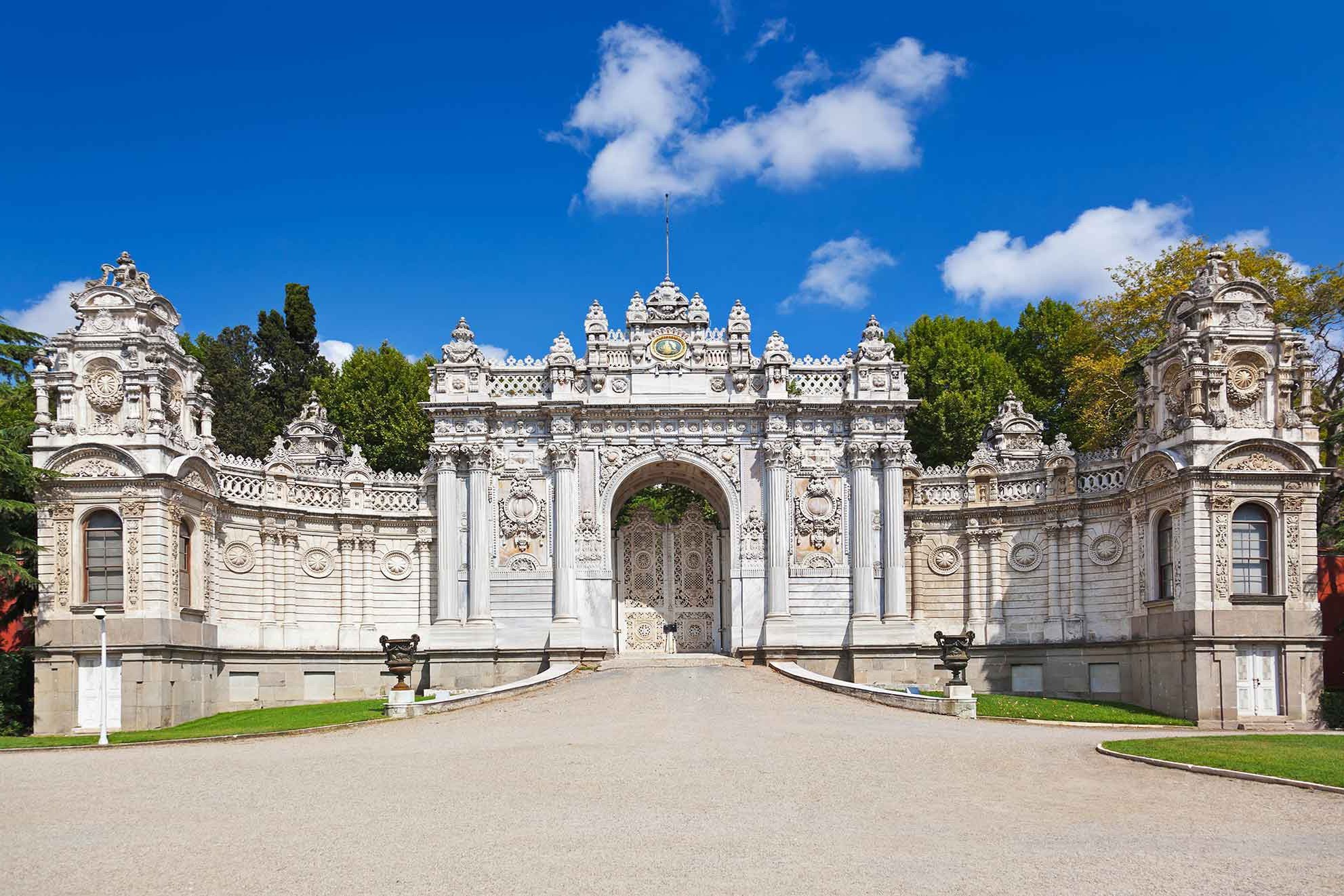
Following the First World War and the eventual collapse of the Ottoman Empire, Dolmabahce became connected with the final chapter of the dynasty.
Sultan Mehmed VI Vahdeddin, the last Ottoman sultan, departed Istanbul from the Dolmabahce area in 1922 after the abolition of the sultanate.
Abdulmecid II and the End of the Caliphate
After the abolition of the Ottoman sultanate, Abdulmecid II was selected as caliph.
He was not an Ottoman sultan, and his position represented a significantly different institution within the emerging political order.
Dolmabahce Palace became associated with this final phase of Ottoman dynastic presence in Istanbul.
In 1924, the new Turkish Republic abolished the caliphate.
Abdulmecid II and other members of the Ottoman dynasty were required to leave Turkey, bringing centuries of Ottoman dynastic residence in Istanbul to an end.
Dolmabahce Palace and the Turkish Republic
The establishment of the Republic of Turkey gave Dolmabahce Palace a new role.
The former residence of the Ottoman sultans became an important setting for state occasions, international guests, cultural events, and official activities.
Mustafa Kemal Ataturk used Dolmabahce during his stays in Istanbul.
Foreign rulers and statesmen were received here, and important cultural and academic gatherings were organized within the palace.
Dolmabahce therefore connects two major periods of Turkish history: the final century of the Ottoman Empire and the formative years of the Turkish Republic.
Mustafa Kemal Ataturk at Dolmabahce Palace
The most important Republican-era figure associated with Dolmabahce is Mustafa Kemal Ataturk, founder and first president of the Republic of Turkey.
Ataturk used the palace as a presidential residence during periods when he was in Istanbul.
Dolmabahce also hosted meetings, official receptions, and important cultural events during his presidency.
But the palace would ultimately become associated with the final days of his life.
Ataturk’s Final Days
During his final illness in 1938, Ataturk stayed at Dolmabahce Palace.
His health deteriorated during the autumn, and he died here on November 10, 1938.
The room in which he died has been preserved as one of the most emotionally significant spaces in the palace.
The clocks in the room are traditionally displayed at 9:05, the time of his death.
For many Turkish visitors, this room gives Dolmabahce an importance that extends far beyond its Ottoman imperial history.
From Imperial Residence to Museum
Following the establishment of the Republic, Dolmabahce gradually developed into a historic palace open to the public while continuing to be used on certain official occasions.
Today, the palace is preserved as one of Istanbul’s most important historic monuments.
Its rooms, furnishings, paintings, carpets, chandeliers, ceremonial spaces, gardens, and waterfront architecture provide an extraordinary record of the final century of Ottoman court life.
Rather than recreating an imperial environment from empty rooms, Dolmabahce preserves much of the atmosphere and material culture associated with the palace itself.
Dolmabahce Palace or Topkapi Palace?
Visitors sometimes wonder whether they should visit Dolmabahce Palace or Topkapi Palace.
Ideally, both should be experienced because they represent completely different periods of Ottoman history.
Topkapi reflects the world of the Ottoman Empire from the 15th century onward, with its courtyards, pavilions, Imperial Council, Treasury, Sacred Relics, and traditional Harem.
Dolmabahce represents the transformed Ottoman court of the 19th century, when European diplomatic, artistic, architectural, and cultural influences had become increasingly important.
Visiting both provides one of the clearest ways to understand how the Ottoman dynasty and its imperial culture changed over the centuries.
Visiting Dolmabahce Palace Today
Dolmabahce Palace is one of Istanbul’s major historic attractions and requires a separate entrance ticket.
Because of the size of the complex and the richness of its interiors, visitors should allow sufficient time rather than treating the palace as a brief sightseeing stop.
Access arrangements, opening hours, and individual sections available to visitors may occasionally change because of official events, restoration work, or operational requirements.
Tickets and Entrance
Entrance to Dolmabahce Palace is ticketed, and visitor demand can be considerable during busy periods.
For guests joining Eskinazi Tours & Events private tours, entrance tickets can be arranged and prepaid in advance.
This helps avoid spending valuable touring time waiting to purchase tickets on site and allows the day’s itinerary to be organized more efficiently.
Prepaid tickets do not bypass mandatory security procedures or other access controls required by the palace administration.
Security and Palace Rules
Visitors pass through security procedures before entering the palace complex.
Because Dolmabahce contains historic interiors, original furnishings, artworks, carpets, and fragile decorative elements, visitor regulations are more controlled than at many outdoor monuments.
Photography and equipment rules may differ between areas and can change according to current palace regulations.
Visitors should follow the instructions of palace staff throughout the visit.
How Much Time Should You Allow?
A visit to Dolmabahce Palace generally deserves approximately one and a half to two hours.
Visitors with a particular interest in Ottoman history, architecture, decorative arts, the Imperial Harem, or Ataturk may wish to allow longer.
The time required also depends on which sections of the palace are open and included in the visit.
Visiting Dolmabahce Palace with a Private Guide
Dolmabahce becomes considerably more meaningful when understood within the dramatic transformation of the Ottoman Empire during the 19th century.
With your own licensed private guide, the palace can be explored not simply as a collection of beautiful rooms but as a historical document.
Your guide can explain why the Ottoman dynasty moved away from Topkapi Palace, how European architectural influences entered the imperial court, how the Selamlik and Harem functioned, and how Dolmabahce became connected with the final Ottoman sultans and the early Turkish Republic.
The architecture and decoration then become part of a much larger story about an empire attempting to redefine itself in a rapidly changing world.
Combine Dolmabahce Palace with the Bosphorus
Dolmabahce Palace occupies an exceptional location directly beside the Bosphorus, making it particularly suitable for itineraries exploring Istanbul beyond the historic peninsula.
A private tour can combine the palace with a private Bosphorus cruise or with other districts and monuments along the European shore.
It can also be incorporated into a broader itinerary exploring Taksim, Istiklal Street, Galata, Besiktas, or other parts of modern and Ottoman Istanbul.
For visitors interested in Ottoman history, combining Dolmabahce with Topkapi Palace offers an especially revealing comparison between two very different periods of imperial life.
Discover Dolmabahce Palace as Part of Your Private Istanbul Tour
Step inside the extraordinary world of the late Ottoman court and discover one of the most magnificent palaces on the Bosphorus.
Explore the ceremonial halls, monumental staircases, imperial apartments, crystal chandeliers, elegant furnishings, and private spaces of the Ottoman dynasty while learning about Sultan Abdulmecid I, the final Ottoman sultans, and Mustafa Kemal Ataturk.
With Eskinazi Tours & Events, Dolmabahce Palace can be incorporated into a personalized private tour focusing on Ottoman history, architecture, the Bosphorus, or the transformation from the Ottoman Empire to modern Turkey.
Entrance tickets can be arranged and prepaid in advance, helping you avoid the on-site ticket-purchase queue and use your time in Istanbul more efficiently.