

Discover the Historic Spice Trade of Ottoman Istanbul
Filled with the aromas of spices, dried fruits, teas, herbs, nuts, and traditional sweets, the Spice Market is one of Istanbul’s most atmospheric historic marketplaces.
Located in Eminonu beside the New Mosque and only a short walk from the Golden Horn, the market has been part of Istanbul’s commercial life since the 17th century.
Known in Turkish as the Misir Carsisi, or Egyptian Bazaar, it developed as part of the New Mosque Complex and became particularly associated with spices, medicinal herbs, and products arriving in Istanbul through the extensive trading networks connecting the Ottoman capital with Egypt, the eastern Mediterranean, Arabia, India, and beyond.
Today, the Spice Market remains an active marketplace where centuries of commercial tradition continue within the heart of modern Istanbul.
Why Is It Called the Egyptian Bazaar?
The Turkish name Misir Carsisi literally means Egyptian Bazaar.
The name became commonly associated with the market during the 18th century.
There are two closely connected explanations for its origin.
The construction of the bazaar was associated with revenues and taxes connected with Ottoman Egypt, while many of the spices, medicinal products, and other commodities sold here also reached Istanbul through Egypt.
Egypt occupied an important position within the Ottoman commercial system and served as a major link between Istanbul and trading networks extending toward the Red Sea, Arabia, India, and the wider Indian Ocean.
For international visitors, the market eventually became better known simply as the Spice Market or Spice Bazaar.
The Spice Market and the New Mosque
The history of the Spice Market is inseparable from the magnificent New Mosque standing beside it.
The mosque complex had originally been initiated at the end of the 16th century under Safiye Sultan, but construction was interrupted for decades.
The project was eventually revived by Turhan Sultan, mother of Sultan Mehmed IV.
As part of the completed imperial complex, a commercial market was constructed beside the mosque.
This relationship between a mosque and a marketplace was not unusual within Ottoman cities.
Commercial properties could generate revenue to support religious, charitable, educational, and social institutions established through an imperial foundation.
The Spice Market therefore had an economic purpose closely connected with the New Mosque complex.
Turhan Sultan and the Completion of the Market
The construction of the present Spice Market began in 1660 under the patronage of Turhan Sultan.
The project was initially associated with the chief imperial architect Kasım Aga and was completed under Mustafa Aga in 1664.
Turhan Sultan was one of the most important women of the 17th-century Ottoman dynasty.
As Valide Sultan, or mother of the reigning sultan, she possessed considerable status and became an important architectural patron.
The completion of the New Mosque and its associated commercial buildings created one of the defining architectural ensembles of Eminonu.
What Is an Arasta?
The Spice Market was constructed as an arasta associated with the New Mosque complex.
An arasta was a commercial market containing rows of shops, frequently established as part of a religious or charitable foundation.
Rental income generated by these businesses could contribute toward the maintenance of the larger complex.
This arrangement illustrates an important feature of Ottoman urban development.
Mosques were often not isolated places of worship. Major imperial complexes could include schools, fountains, tombs, charitable kitchens, hospitals, baths, markets, and other institutions.
Commerce therefore helped support the religious and social infrastructure of the city.
The Valide Bazaar and New Bazaar
The market was not always known as the Egyptian Bazaar.
During its earlier history, it was referred to by names including the Valide Bazaar and New Bazaar.
“Valide” referred to the Valide Sultan, the mother of the reigning Ottoman sultan, reflecting the patronage of Turhan Sultan.
Over time, however, the connection with Egyptian revenues and merchandise became so strongly associated with the market that the name Misir Carsisi gradually became dominant.
By the 18th century, the Egyptian Bazaar had become the name by which the marketplace was commonly known.
Istanbul and the International Spice Trade
To understand the Spice Market, it is important to understand Istanbul’s extraordinary geographic position.
The Ottoman capital stood between Europe and Asia and controlled maritime routes connecting the Black Sea and Mediterranean.
Goods could reach Istanbul through the Balkans, Anatolia, the Caucasus, Persia, Syria, Egypt, Arabia, and Mediterranean ports.
Spices and luxury commodities arriving from even greater distances could travel through complex networks linking the Ottoman world with India, Southeast Asia, and the Indian Ocean.
Istanbul was therefore not merely a final destination for these goods.
It was also a major commercial center from which products could be redistributed throughout the empire and toward European markets.
Why Were Spices So Valuable?
Today, spices are ordinary ingredients found in almost every kitchen.
Historically, however, many spices were expensive commodities transported across enormous distances.
Pepper, cinnamon, cloves, nutmeg, saffron, and other products could pass through numerous merchants and ports before reaching consumers in Istanbul or Europe.
Their value came not only from their flavor.
Spices could be used in cooking, medicine, perfumes, cosmetics, preservation, and traditional preparations.
The spice trade therefore formed part of a much larger commercial system connecting agriculture, medicine, cuisine, luxury consumption, and international trade.
Egypt and the Spice Routes
Egypt played a particularly important role in the movement of goods between the Indian Ocean and the Mediterranean.
Products arriving through the Red Sea could pass through Egyptian commercial centers before continuing toward Mediterranean ports.
After the Ottoman conquest of Egypt in 1517, these networks became part of the wider Ottoman commercial world.
Goods reaching Egypt from Arabia, India, and regions farther east could eventually make their way toward Istanbul.
This helps explain why an Istanbul market connected with Egyptian commerce became so strongly associated with spices and exotic products.
The Traditional Aktar
One of the characteristic merchants of the Spice Market was the aktar.
An aktar traditionally specialized in herbs, spices, plant products, natural substances, and ingredients used in traditional remedies.
Before the development of modern pharmacies, such merchants played an important role in everyday urban life.
Their shops could contain dried plants, seeds, roots, resins, oils, spices, and numerous substances used for cooking or traditional medicinal preparations.
The historic Spice Market became particularly famous for these businesses.
Modern visitors can still see shops continuing aspects of this tradition.
Herbs and Traditional Remedies
Historically, the distinction between food and medicine was not always as clear as it is today.
Plants, spices, oils, and natural substances could be used both in cooking and in traditional approaches to health.
The shops of the Spice Market therefore supplied households as well as practitioners preparing remedies.
This does not mean that traditional products should be considered substitutes for modern medical treatment.
Historically, however, they formed an important part of Ottoman everyday life and provide valuable insight into the relationship between commerce, cuisine, and traditional medicine.
Architecture of the Spice Market
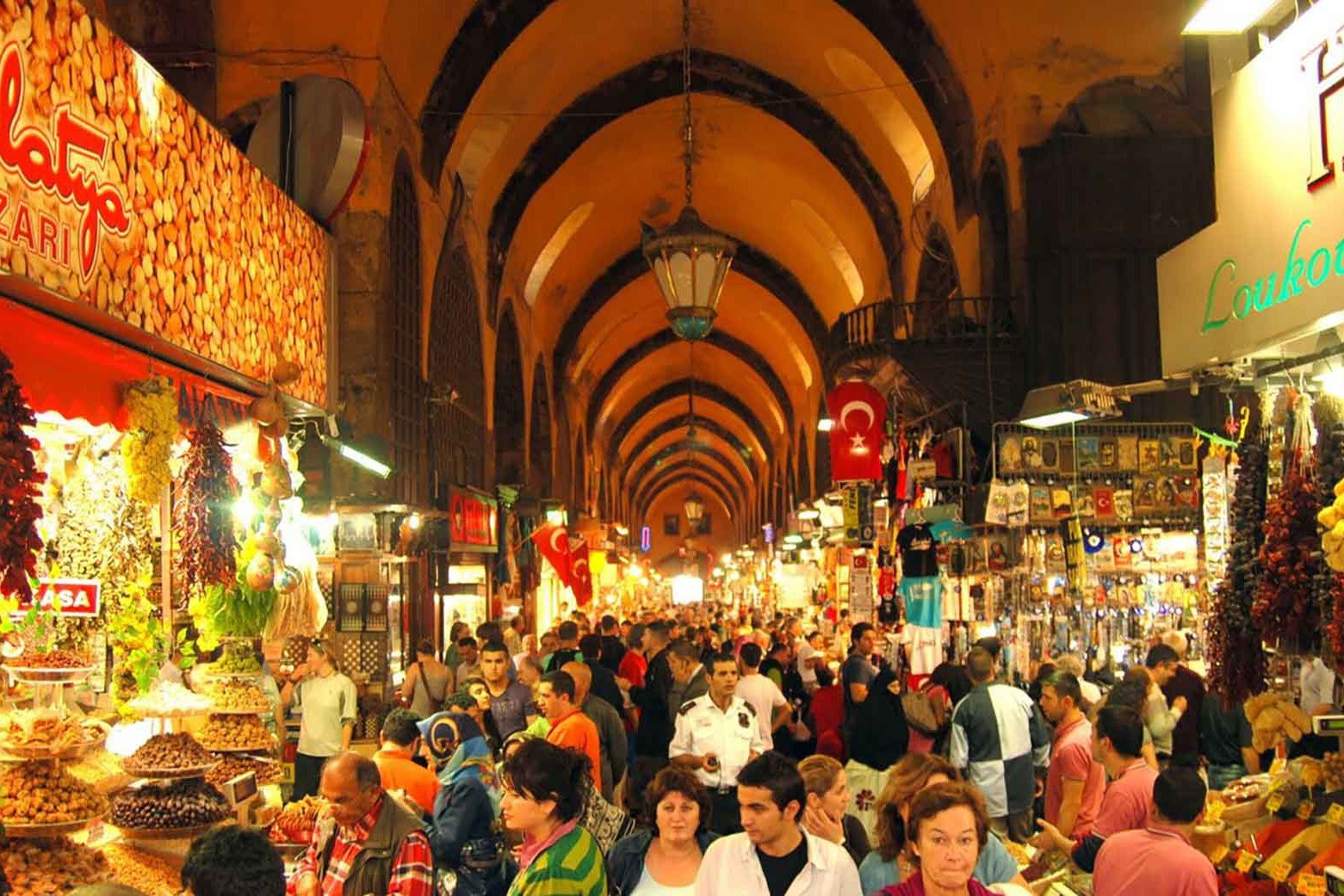
The Spice Market is much smaller than the Grand Bazaar but possesses a very distinctive architectural character.
The historic structure follows an approximately L-shaped plan formed by two principal covered passages.
Vaulted ceilings extend above rows of shops, while several gates connect the interior with the surrounding commercial streets.
The relatively compact layout makes the market easier to explore than the enormous network of streets within the Grand Bazaar.
Its architecture also reflects its original function as a purpose-built component of the New Mosque complex rather than a commercial district that expanded gradually over many centuries.
The Six Gates
The historic market has six principal gates connecting it with the surrounding neighborhoods and commercial areas.
Their names and usage have changed over time, reflecting the trades and streets around the bazaar.
The entrances historically connected the market with areas associated with fish sellers, flower sellers, textile merchants, the New Mosque, and the busy commercial streets of Eminonu.
These gates demonstrate how the Spice Market functioned as part of a much larger urban marketplace rather than as an isolated building.
The Shops of the Original Market
Historical accounts indicate that the bazaar originally contained around one hundred commercial units, many associated with aktars, cotton merchants, and related trades.
The arrangement of shops reflected the organized character of Ottoman commerce.
Certain entrances and sections became associated with particular professions.
An aktar’s shop could include a sales area at the front and storage or preparation space behind it.
This organization reveals how the market combined retail activity with the storage and preparation of merchandise.
A Market Without Modern Shop Signs
One fascinating tradition associated with the historic market concerns the identification of individual shops.
In a society where not every customer could necessarily read a written shop name, merchants could identify their businesses through distinctive symbols.
Historic records describe shop signs or emblems representing recognizable objects.
Such visual identifiers allowed customers to remember and locate particular merchants.
This small detail provides an interesting glimpse into the everyday commercial culture of Ottoman Istanbul.
Fires and Restoration
Like many historic commercial areas of Istanbul, the Spice Market suffered damage from fires.
Dense urban construction, open flames, heating, cooking, and the storage of combustible materials made fire a constant danger in Ottoman cities.
A major fire damaged the market in 1691, and later fires and alterations also affected the building.
Significant restoration work was carried out during the 20th century, including a major restoration between 1940 and 1943.
Further conservation work in the 21st century has helped preserve the historic structure while allowing it to continue functioning as an active marketplace.
The Spice Market and Eminonu
The location of the Spice Market in Eminonu is essential to understanding its history.
For centuries, this area was one of Istanbul’s busiest commercial zones.
The nearby waterfront connected merchants with ships arriving along the Golden Horn and Bosphorus.
Warehouses, hans, markets, workshops, mosques, docks, and commercial streets filled the surrounding districts.
Goods arriving by sea could be unloaded near the markets where they would be stored, processed, sold, or redistributed.
The Spice Market therefore developed in exactly the type of location required by a major international trading city.
The Golden Horn and Ottoman Commerce
The Golden Horn served as one of the great natural harbors of Istanbul.
Its sheltered waters provided access to the commercial districts of the Ottoman capital.
Ships and smaller vessels carried food, raw materials, manufactured goods, and luxury products into the city.
The neighborhoods around Eminonu became densely packed with merchants and commercial buildings.
Even today, walking through the streets surrounding the Spice Market reveals the intensity of this commercial tradition.
The historic bazaar is only one component of a much larger marketplace that continues through the surrounding streets.
The Hans Around the Spice Market
The neighborhoods between the Spice Market, Grand Bazaar, Suleymaniye, and the Golden Horn contain numerous historic hans.
These commercial buildings were essential to Ottoman trade.
Hans could contain warehouses, workshops, offices, shops, and accommodation arranged around central courtyards.
Merchants arriving from other regions could conduct business within these commercial complexes while goods were stored or prepared for sale.
Exploring the surrounding streets therefore helps visitors understand that the famous covered market was only one part of an enormous commercial network.
The Spice Market and the Grand Bazaar
The Spice Market and Grand Bazaar are sometimes confused, but they are separate historic marketplaces.
The Grand Bazaar is much larger and developed around commercial institutions established after the Ottoman conquest of Constantinople in the 15th century.
It became associated with an enormous variety of trades, including textiles, jewelry, carpets, leather, antiques, and precious goods.
The Spice Market was constructed later as part of the New Mosque complex and became particularly associated with spices, herbs, food products, and medicinal ingredients.
Visiting both provides a much broader understanding of Ottoman commercial life.
The Commercial Route Between the Two Bazaars
The Grand Bazaar and Spice Market are connected by one of the most fascinating commercial areas of historic Istanbul.
Walking downhill from the Grand Bazaar toward Eminonu leads through Mahmutpasa and surrounding streets filled with shops, workshops, and historic hans.
For centuries, these streets formed part of the commercial network linking the elevated markets of the historic peninsula with the waterfront.
The route demonstrates how Ottoman commerce extended far beyond the walls of the two famous covered bazaars.
For visitors interested in local life and historic neighborhoods, walking between the markets can be as interesting as visiting the markets themselves.
What Can You Find in the Spice Market Today?
The character of the market has evolved considerably, but food and traditional products remain central to its identity.
Visitors commonly encounter spices, teas, dried fruits, nuts, Turkish delight, sweets, herbs, coffee, delicatessen products, honey, and other regional foods.
Some shops also sell ceramics, textiles, souvenirs, jewelry, and decorative objects.
The surrounding streets expand the selection considerably and remain heavily used by Istanbul residents as well as visitors.
The result is a mixture of historic marketplace, tourist attraction, and living commercial district.
Turkish Delight and Traditional Sweets
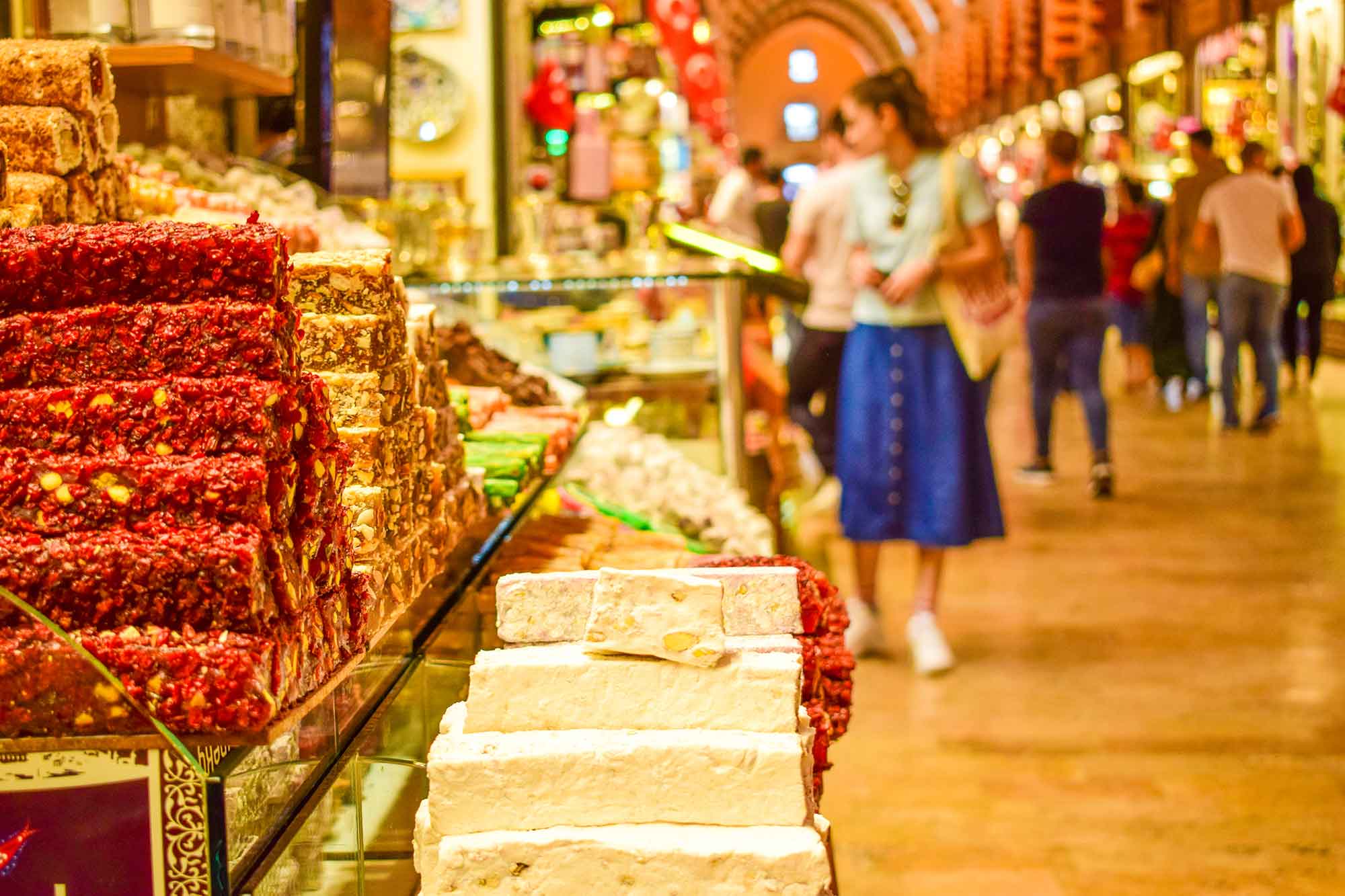
Turkish delight, known locally as lokum, is one of the products most strongly associated with the Spice Market today.
Different varieties may contain pistachios, hazelnuts, walnuts, fruit flavors, rose, citrus, or other ingredients.
Traditional confectionery forms an important part of Ottoman and Turkish culinary culture.
Visitors interested in food can also encounter other sweets, dried fruits, nuts, and regional specialties throughout the market and surrounding streets.
The variety makes the Spice Market particularly appealing for travelers interested in discovering Istanbul through its culinary traditions.
Tea, Coffee and Everyday Food Culture
Although Turkish coffee has a much longer history in Ottoman Istanbul than modern Turkish tea culture, both are now deeply associated with everyday life in Turkey.
Shops around the Spice Market sell coffee, tea blends, herbal infusions, and related products.
Nearby streets also contain historic businesses specializing in Turkish coffee.
The surrounding area therefore provides an opportunity to experience not only the historic spice trade but also elements of contemporary Turkish food and drink culture.
Is the Spice Market Only for Shopping?
No.
Like the Grand Bazaar, the Spice Market is worth visiting even if you have no intention of buying anything.
The market provides insight into Ottoman commerce, international trade, culinary history, traditional herbalism, architecture, and the development of Eminonu.
Its aromas, displays, vaulted passages, surrounding streets, and relationship with the New Mosque create one of the most distinctive urban experiences in Istanbul.
Visitors interested primarily in history can explore the market without making shopping the focus of the visit.
Shopping During an Eskinazi Private Tour
At Eskinazi Tours & Events, visiting the Spice Market does not involve compulsory shopping stops or predetermined stores.
Our private tours are designed around the interests of our guests.
If you would simply like to experience the atmosphere of the market and learn about its history, your guide can focus entirely on the architecture, spice trade, Ottoman commercial system, and surrounding neighborhood.
If you personally wish to purchase spices, sweets, tea, or other products, you are naturally free to explore the shops that interest you.
We do not need to be involved in your purchases, and the amount of time spent shopping is entirely your decision.
Bargaining in the Spice Market
Bargaining may be possible in some shops, particularly for certain souvenirs and higher-value products, but it is not universal.
Many food shops and established businesses sell products at displayed or relatively fixed prices.
Visitors should feel comfortable asking about prices, quantities, ingredients, and packaging before purchasing.
There is never an obligation to buy simply because a product has been offered or sampled.
Taking time to compare products can be useful, particularly when purchasing spices, sweets, or other food items to take home.
Visiting the Spice Market Today
The Spice Market remains an active commercial market and does not require a normal entrance ticket.
Because it is a functioning marketplace rather than a museum, individual businesses may maintain different schedules.
Opening arrangements can also vary during religious holidays, public holidays, and special occasions.
The market can become busy, particularly during popular visiting periods, but its compact layout makes it relatively easy to incorporate into a broader tour of historic Istanbul.
How Much Time Should You Allow?
A focused visit to the Spice Market generally requires approximately 30 to 45 minutes.
Visitors interested in food, photography, shopping, or exploring the surrounding commercial streets may wish to spend an hour or longer.
The experience can also be extended by visiting the New Mosque, walking through the nearby hans, or continuing toward the Grand Bazaar.
Combine the Spice Market with the New Mosque
The New Mosque and Spice Market were historically parts of the same imperial complex and are therefore ideally visited together.
The mosque represents the religious and monumental aspect of the foundation, while the market demonstrates the commercial system that helped support it.
Seeing the two together provides an excellent introduction to the Ottoman concept of the kulliye, in which religious, charitable, social, and commercial institutions could form an integrated urban complex.
Combine the Spice Market with Suleymaniye Mosque
The market can also be combined with Suleymaniye Mosque.
Walking between them takes visitors through some of the most historically important commercial neighborhoods of Ottoman Istanbul.
The route passes streets filled with shops and hans and reveals how the monumental imperial complexes of the city were connected with everyday economic life.
From Suleymaniye’s commanding position above the Golden Horn to the busy streets of Eminonu below, the area offers one of the best introductions to the urban landscape of Ottoman Istanbul.
Combine the Spice Market with a Bosphorus Cruise
Its location near the waterfront also makes the Spice Market particularly convenient to combine with a Bosphorus cruise.
Visitors can explore the market and surrounding Eminonu district before continuing toward the waterfront.
This combination offers two very different perspectives on Istanbul.
The market introduces the commercial life of the historic city, while the Bosphorus reveals the palaces, mosques, fortresses, neighborhoods, and waterfront mansions that developed along the strait.
Visiting the Spice Market with a Private Guide
The colorful displays and aromas of the Spice Market are immediately enjoyable, but understanding its history adds another dimension to the experience.
With your own licensed private guide, you can discover why the market was constructed beside the New Mosque, how commercial revenues supported Ottoman religious foundations, why it became known as the Egyptian Bazaar, and how spices traveled through international trading networks before reaching Istanbul.
Your guide can also explain the role of aktars, hans, waterfront commerce, and the relationship between the Spice Market and the wider commercial districts of the historic peninsula.
The visit then becomes more than a shopping experience.
It becomes an introduction to Istanbul as one of the great trading cities of the early modern world.
Discover the Spice Market as Part of Your Private Istanbul Tour
Experience the aromas, flavors, history, and commercial traditions of one of Istanbul’s most famous historic markets.
Explore the Spice Market beside the New Mosque, learn about the international trade routes that brought spices and other valuable commodities to the Ottoman capital, and discover the bustling streets of Eminonu and the Golden Horn.
With Eskinazi Tours & Events, the Spice Market can be incorporated into a personalized private tour focusing on Ottoman history, traditional markets, culinary culture, local neighborhoods, or the major highlights of Istanbul.
Whether you wish to shop or simply explore the market’s history and atmosphere, the visit can be designed entirely around your interests.
Contact us to create a personalized private tour of Istanbul and discover the history, flavors, and living commercial traditions of the Spice Market.