

Tracing the Legacy: Jewish History in Istanbul
“Can Ferdinand truly be called a wise king? He depletes his own kingdom while filling my coffers!” exclaimed Sultan Beyazid II upon welcoming Jewish families to Istanbul in 1492, a sanctuary offered amidst the grim shadows of the Spanish Inquisition. This historical gesture highlights Istanbul’s significant role as a haven and cultural nexus for Jewish communities, whose roots stretch deeply into the fabric of the city’s intricate history.
Early Beginnings: Byzantine Challenges
The earliest Jewish communities in Istanbul date back to the Byzantine Empire. Historical records from 420 AD document an edict by Emperor Theodosius II, which forced Jews from Constantinople to settle across the Golden Horn in Galata. This exile marked a tumultuous period for the Byzantine Jewish communities, whose resilience would later be profoundly tested under subsequent regimes. Despite facing repeated adversities and marginalization, these early communities laid the foundations for what would eventually become vibrant Jewish life in the region.
A New Era Under Ottoman Rule
The fall of Constantinople in 1453 under Sultan Mehmet II dramatically transformed the fate of the Jewish communities, notably the Romaniots—Jewish inhabitants of Byzantine origin. With the Ottoman conquest, the Romaniots transitioned from oppressed subjects to recognized and protected citizens of the expansive Ottoman Empire. Mehmet II’s inclusive policies revitalized Jewish cultural and religious life, replacing the restrictive ghettos of Byzantium with thriving neighborhoods.
The benevolent approach of the Ottoman Empire towards its Jewish inhabitants was further amplified during the rule of Beyazid II, particularly following the Spanish expulsion of Jews in 1492. Sultan Beyazid’s open invitation resulted in a significant influx of Sephardic Jews, who brought with them rich Iberian traditions, intellectualism, and trade expertise. This influx profoundly impacted the demographic and cultural landscape of Istanbul, fostering a flourishing Jewish Renaissance within the Ottoman capital.

Flourishing Jewish Communities Across Istanbul
European Side Neighborhoods
With stability under Ottoman rule, Jewish neighborhoods expanded significantly. Historically prominent areas such as Galata, Balat, and Hasköy on the European side of Istanbul became centers of Jewish life and commerce. Balat, particularly, emerged as a significant cultural heart, known for its distinctive architecture, synagogues, and vibrant social life.
Similarly, Jewish communities blossomed in other strategic districts, including Şişli, Ortaköy, and Ulus—each reflecting unique aspects of Istanbul’s cosmopolitan tapestry. Ortaköy, renowned today for its picturesque vistas by the Bosphorus, was historically known as a multicultural hub where synagogues, churches, and mosques stood in close proximity, symbolizing Istanbul’s enduring pluralism.
Asian Side Neighborhoods
On Istanbul’s Asian shores, neighborhoods such as Kuzguncuk, Kadıköy, and Haydarpaşa witnessed the establishment of smaller yet equally significant Jewish communities. Kuzguncuk, in particular, retains its charm as a historic area known for its cultural diversity, reflected in the close-knit coexistence of its synagogues, churches, and mosques.
Synagogues: Centers of Spiritual and Cultural Life
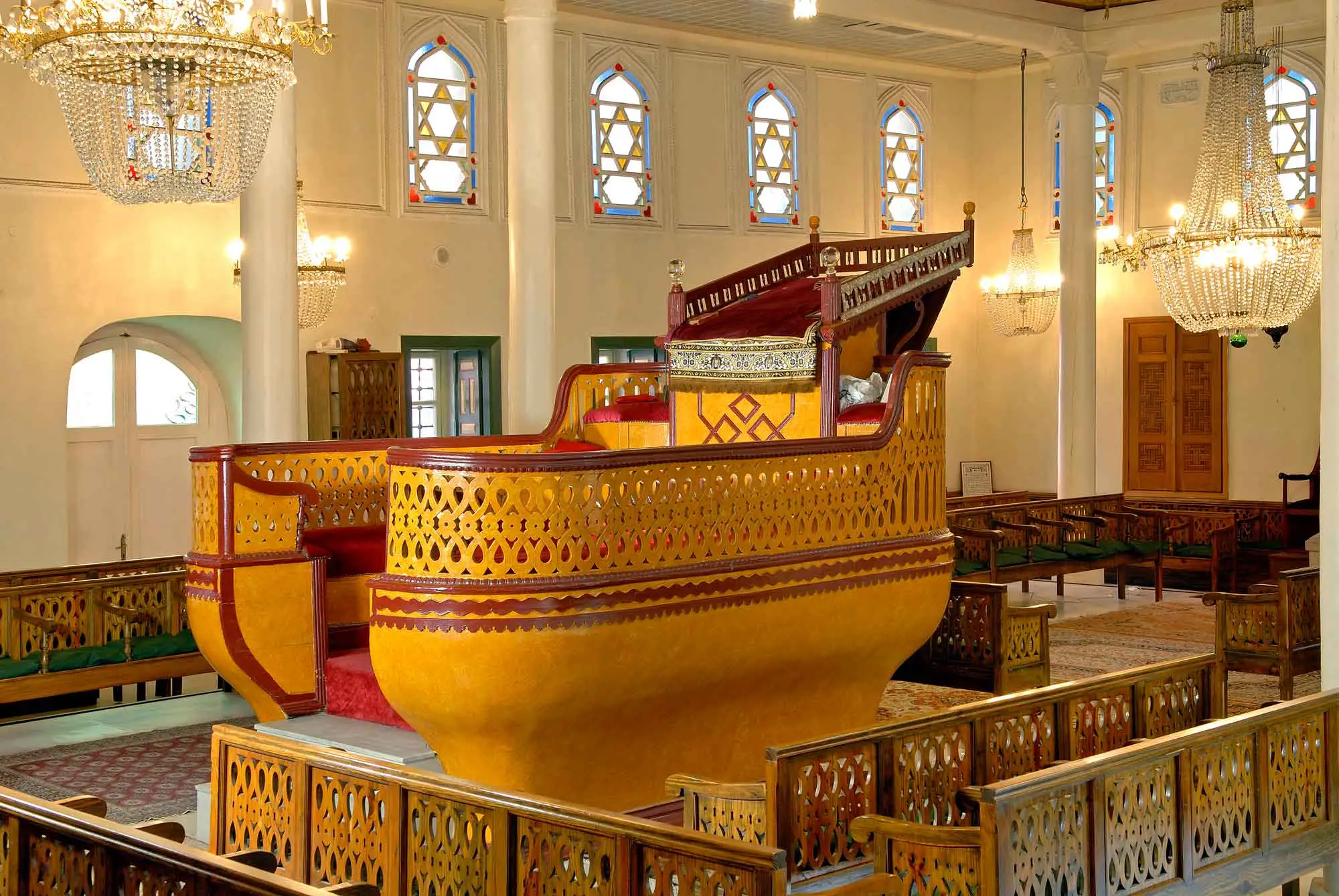
Throughout Istanbul’s Jewish history, synagogues have functioned not merely as religious centers but as focal points of education, community interaction, and cultural preservation. Today, Istanbul hosts around 17 active synagogues, each bearing unique historical significance. Among them, notable examples include Neve Shalom Synagogue, the largest Sephardic synagogue in Istanbul; Ahrida Synagogue in Balat, one of the oldest synagogues dating back to the 15th century; and the elegant Etz Ahayim Synagogue in Ortaköy.
These synagogues continue to serve not only as places of worship but also as repositories of communal history, safeguarding centuries-old Sephardic traditions, melodies, and liturgies passed down through generations.
Institutional Foundations: The Chief Rabbinate
Central to Istanbul’s Jewish community is the Chief Rabbinate Office, constitutionally recognized as the highest Jewish religious authority in Turkey. This institution oversees religious practices, education, community welfare, and interfaith relations, playing a pivotal role in maintaining and nurturing the continuity of Jewish life in Istanbul.
The Chief Rabbinate has also historically served as a diplomatic representative of the Jewish community, engaging constructively with governmental and civic authorities to ensure community interests are met, thus reinforcing the enduring vitality of Istanbul’s diverse cultural mosaic.
Preserving Jewish Heritage and Fostering Dialogue
The Jewish community’s history in Istanbul is characterized by remarkable resilience and adaptive creativity, shaped by various cultural influences across centuries. Despite historical challenges, the community has consistently revitalized itself through cultural preservation initiatives, intercommunal dialogue, and active participation in broader social and civic spheres.
Organizations such as the Quincentennial Foundation Museum of Turkish Jews play crucial roles in preserving and narrating the rich Jewish heritage. Located in Istanbul, this museum documents the intricate journey of Turkish Jews, offering insights into their vibrant traditions, influential figures, and historical experiences.
Modern Jewish Life in Istanbul
Today, the Jewish community in Istanbul continues to be a vibrant and integral part of the city’s dynamic social fabric. Active community centers, educational institutions, and cultural associations foster a sense of belonging, bridging historical traditions with contemporary life.
Jewish festivals and holidays such as Hanukkah, Passover, and Rosh Hashanah are celebrated with both communal enthusiasm and wider civic participation, reinforcing Istanbul’s identity as a city that cherishes diversity.
Discover Jewish Heritage Tours with Eskinazi Tours and Events
The story of Istanbul’s Jewish heritage is an essential chapter in understanding the city’s multicultural legacy. For visitors eager to explore this remarkable history, guided tours provide invaluable opportunities to experience historic neighborhoods, ancient synagogues, and museums, uncovering layers of narratives that highlight Istanbul’s commitment to tolerance, coexistence, and cultural richness.
As Eskinazi Tours and Events, we specialize in personalized Jewish Heritage tours, guiding you through the historic neighborhoods, synagogues, and museums that vividly narrate Istanbul’s Jewish legacy. Whether you’re tracing family roots, exploring cultural history, or simply seeking to understand Istanbul’s diverse heritage, our expert guides will ensure your journey is informative, respectful, and unforgettable. Discover Istanbul through the stories of its vibrant Jewish communities—let us craft your unique travel experience today.